Travel Bags

How to Clean a White Leather Bag: Easy Stain Removal & Care Guide

How to Clean a White Leather Bags

White leather bags have a timeless charm that instantly adds elegance and sophistication to any look. Whether you carry one to work, a casual outing, or a special event, a clean white handbag creates a fresh and stylish impression. However, unlike darker bags, white leather can quickly reveal even the smallest signs of everyday use. Dust, fingerprints, dirt buildup, stains, and discoloration become visible much faster, which means maintaining that bright and polished appearance requires a little extra attention.

One of the biggest reasons white leather bags need regular care is that leather is a natural material. It can absorb oils from your hands, moisture from the environment, and tiny dirt particles that settle on the surface over time. What may start as a small mark can gradually turn into noticeable yellowing, stubborn stains, or dull-looking leather if it is ignored for too long. Regular leather maintenance not only helps keep the bag clean but also preserves its texture, color, and overall quality.

Many white bag owners commonly deal with issues such as dirt accumulation, yellow stains around the handles, ink marks, scuff marks, makeup stains, and general discoloration. These problems are completely normal with everyday use, especially if the bag is carried frequently. Scuff marks can appear from accidental rubbing against walls or surfaces, while dirt and body oils slowly build up in high-contact areas. Over time, these small imperfections can make a beautiful leather bag lose its original appeal.

The good news is that proper cleaning methods can make a significant difference. Cleaning leather is not simply about wiping away visible dirt. Using harsh chemicals, excessive water, or rough cleaning materials can damage the leather surface and affect its softness and durability. Safe leather care practices help remove stains without causing cracking, fading, or texture damage. The right approach protects the material while extending the lifespan of your favorite handbag.

Fortunately, learning how to clean a white leather bag does not have to be difficult. A few simple steps can help restore and maintain its clean appearance. In this guide, you will discover effective cleaning techniques, safe stain removal methods, useful leather care tips, and easy maintenance practices to prevent future damage. From removing surface dirt to conditioning the leather and protecting it from future stains, these methods will help keep your white leather bag looking fresh, stylish, and beautifully maintained for years to come.

Table of Contents

What You Need Before Cleaning a White Leather Bag

Before you start cleaning your white leather bag, gathering the right tools and cleaning materials can make the process much easier and safer. Many people make the mistake of using random household cleaners or rough cloths, thinking they will remove stains quickly. However, leather is a delicate material, and using the wrong products can lead to discoloration, dryness, fading, or even permanent damage.

The goal is not simply to remove dirt from the surface; it is to clean the leather safely while preserving its original texture, softness, and appearance. Using proper leather care products and gentle cleaning tools can help you remove stains effectively without harming the material.

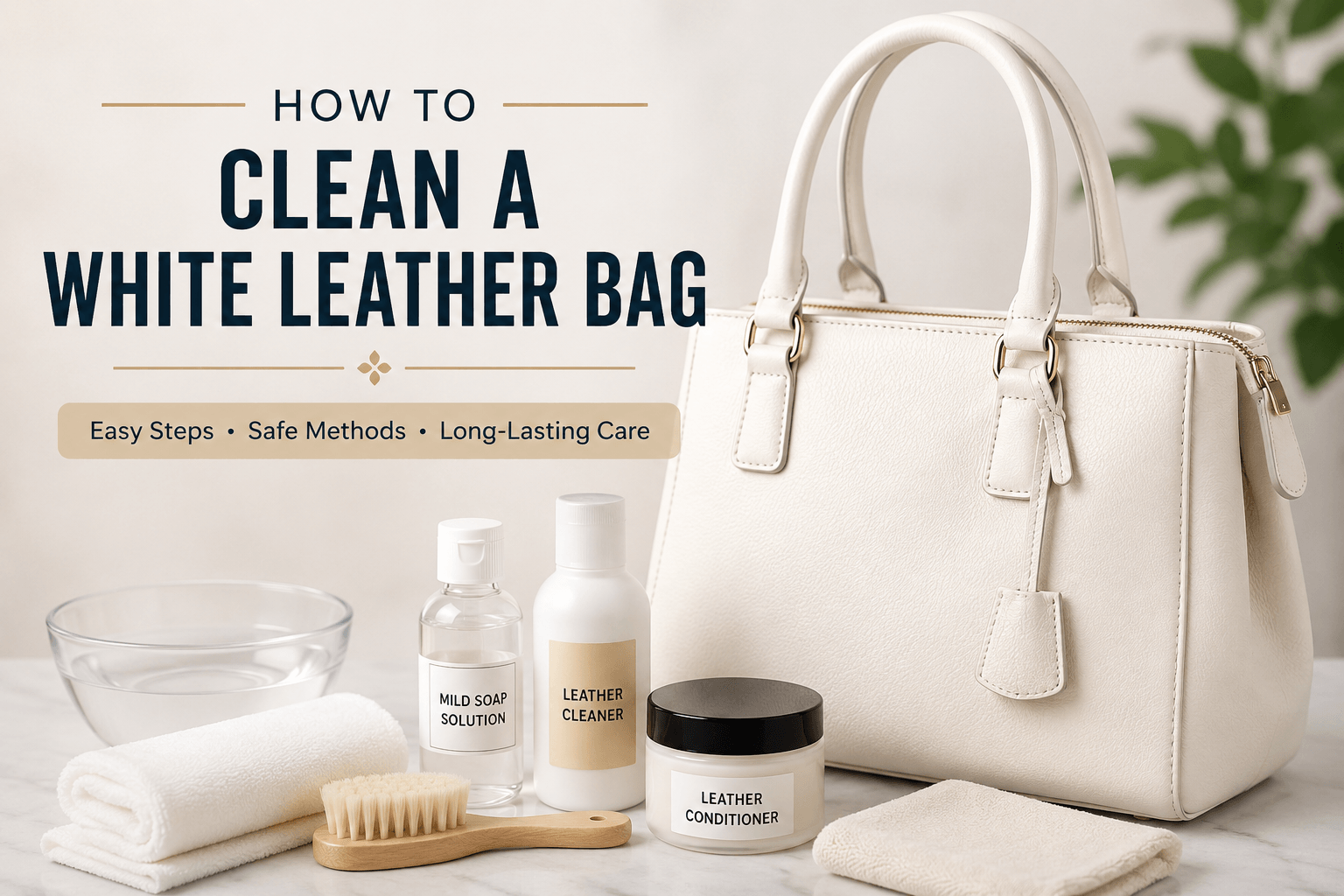
Here are the essential items you should have before cleaning your white leather handbag:

Soft Microfiber Cloth

A soft microfiber cloth is one of the most important tools for leather cleaning and maintenance. Unlike rough fabrics or paper towels, microfiber material gently lifts dirt, dust, and oils from the leather surface without causing scratches.

Microfiber cloths are useful for:

  • Wiping away surface dust
  • Removing light dirt buildup
  • Drying excess moisture
  • Applying leather conditioner
  • Buffing the leather for a clean finish

Always use a clean cloth because a dirty cloth can transfer dust and debris back onto the bag.

Mild Soap Solution

For regular cleaning, a mild soap solution is often enough to remove everyday dirt and minor stains. A small amount of gentle soap mixed with warm water creates a safe cleaning solution for white leather.

A mild cleaning solution helps:

  • Remove surface grime
  • Clean fingerprints and oils
  • Lift light stains
  • Refresh the appearance of the leather

Avoid strong detergents, bleach, or harsh chemical products because these can strip away the leather’s natural moisture and protective finish.

Leather Cleaner

For deeper cleaning or stubborn stains, a specialized leather cleaner can be a useful option. Leather cleaning products are specifically designed to remove dirt while protecting the material from drying out.

A quality leather cleaner may help:

  • Remove embedded dirt
  • Clean stubborn marks
  • Restore a fresh appearance
  • Preserve leather quality

Choose products labeled as safe for delicate or white leather surfaces whenever possible.

Leather Conditioner

Cleaning removes dirt, but it can also reduce some of the moisture that keeps leather soft and flexible. This is where leather conditioner becomes important.

Applying leather conditioner after cleaning can:

  • Restore moisture balance
  • Prevent cracks and dryness
  • Maintain leather softness
  • Preserve the original texture
  • Improve the overall appearance of the bag

Think of conditioning as a moisturizing step for your leather accessory.

Soft Brush

Some areas of a bag, such as seams, corners, stitching, and decorative details, can trap dust and dirt particles that are difficult to remove with a cloth alone.

A soft brush can help you:

  • Clean tight spaces
  • Remove debris gently
  • Lift dirt from textured areas
  • Reach hidden sections of the bag

Use a brush with soft bristles because stiff brushes may create scratches or wear down the leather surface.

Warm Water

Warm water helps activate mild soap and loosen dirt without being too aggressive on leather materials. It should only be used in small amounts because leather absorbs moisture easily.

Keep these simple tips in mind:

  • Use slightly warm water, not hot water
  • Avoid soaking the bag
  • Use a lightly damp cloth instead of a wet one
  • Remove excess moisture immediately

Too much water exposure may lead to water stains or weaken the leather over time.
Understanding White Leather Before Cleaning

Before you start cleaning a white leather bag, it’s important to understand the material you’re working with. White leather is elegant, timeless, and stylish, but it is also more delicate compared to darker shades. Without the right knowledge, even simple cleaning mistakes can lead to discoloration, surface damage, or permanent marks. A basic understanding of leather types, stain behavior, and safe cleaning practices will help you protect your bag and clean it more effectively.

Different Types of Leather

Not all leather is the same, and this plays a big role in how you should clean and care for your white handbag. Each type reacts differently to moisture, cleaning products, and leather maintenance routines.

  • Genuine leather – Made from natural animal hide, it is durable but still porous, meaning it can absorb dirt and oils over time.
  • Full-grain leather – The highest quality leather, known for its natural texture and strength, but it still needs gentle leather care to avoid stains.
  • Top-grain leather – Slightly processed for a smoother finish, easier to clean but still sensitive to harsh chemicals.
  • Faux leather (PU leather) – A synthetic alternative that is easier to maintain but can crack if exposed to strong cleaning agents.
  • Suede leather – Soft and textured, but highly sensitive to water and stains, requiring specialized suede cleaning methods.

Understanding your leather type helps you choose the right leather cleaner, avoid damage, and apply the correct stain removal technique.

Why White Leather Stains Easily

White leather looks beautiful, but it also shows imperfections much more quickly than darker materials. This is mainly due to its light color and porous structure.

Here’s why it stains so easily:

  • Natural oil absorption – Oils from your hands, skin, and environment can easily seep into the leather surface.
  • Dust and dirt visibility – Even small particles become noticeable on a bright white surface.
  • Porous texture – Leather has tiny pores that trap dirt, making deep cleaning necessary over time.
  • Exposure to everyday use – Contact with clothing, makeup, ink pens, and surfaces increases the risk of stains and scuff marks.

Common issues include yellow stains, ink marks, scuff marks, and general dirt buildup, which can make the bag look older than it actually is.

Things to Avoid Before Starting

Before you begin cleaning your white leather bag, there are a few serious mistakes you should avoid to prevent damage:

  • Do not use rough scrubbers or hard brushes
  • Avoid soaking the leather in water
  • Do not use bleach or strong detergents
  • Avoid alcohol-based cleaners or chemical sprays
  • Do not rub stains aggressively
  • Never skip a patch test on a hidden area

These simple precautions help protect the leather surface and ensure safe stain removal without harming the texture or color.

Why Harsh Chemicals Can Damage Leather Texture

One of the biggest mistakes in leather cleaning is using strong or inappropriate chemicals. While they may seem effective at removing dirt quickly, they can permanently damage the material.

Harsh chemicals can:

  • Strip away the natural oils that keep leather soft
  • Cause cracking and dryness over time
  • Fade or discolor the white surface
  • Weaken the leather fibers
  • Ruin the smooth texture and finish

Instead, it’s always better to use a mild soap solution, a proper leather cleaner, or gentle natural methods when needed. These safe leather care practices not only clean the surface but also help preserve the durability, softness, and elegant look of your white leather bag.

By understanding these basics before cleaning, you set the foundation for effective leather maintenance. It ensures that every step you take afterward—whether it’s stain removal, conditioning, or polishing—keeps your white leather bag looking fresh, stylish, and long-lasting.

Step-by-Step Guide: How to Clean a White Leather Bag

Cleaning a white leather bag properly is all about patience, gentle handling, and using the right leather care techniques. Instead of rushing the process, each step should be done carefully to protect the leather surface, preserve its texture, and avoid discoloration or damage. Below is a simple, safe, and effective method to help you restore your white handbag’s clean and elegant look.

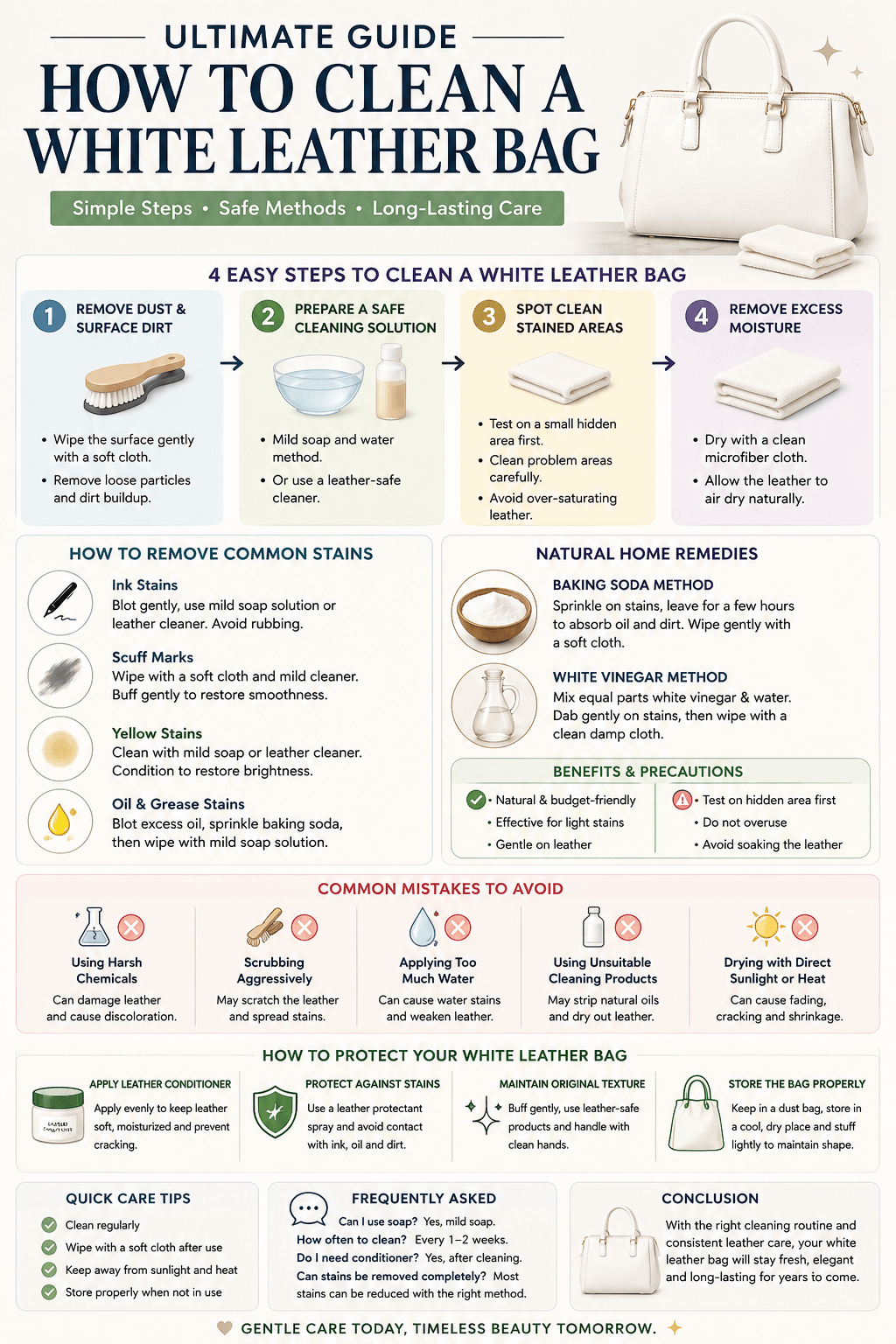
Step 1: Remove Dust and Surface Dirt

Before applying any cleaning solution, start by removing loose dirt, dust buildup, and surface particles. This step is essential because rubbing dirt into leather can cause scratches or make stains worse.

Gently wipe the entire surface of the bag using a soft microfiber cloth. Focus on areas that collect more dust, such as handles, corners, and seams. Use light circular motions instead of harsh rubbing to lift away surface debris without damaging the leather.

If your bag has textured areas or stitching details, you can lightly use a soft brush to loosen trapped dirt. This initial cleaning step helps prepare the leather for deeper stain removal and ensures that the cleaning solution works more effectively.

Step 2: Prepare a Safe Cleaning Solution

Once the surface is clean, the next step is to prepare a gentle and safe cleaning solution. The most common and effective method is using a mild soap and water mixture. This helps break down light dirt, fingerprints, and everyday stains without harming the leather.

Mix a small amount of mild soap with lukewarm water to create a soft cleaning solution. Dip a clean microfiber cloth into the mixture and wring out excess water until it is slightly damp—not wet. Leather should never be soaked, as too much moisture can lead to water stains or texture damage.

If you prefer a more targeted approach, you can also use a leather-safe cleaner specifically designed for delicate materials. These products are formulated for leather stain removal and help maintain the bag’s original softness and finish.

Step 3: Spot Clean Stained Areas

After preparing your cleaning solution, focus on areas that have visible stains, marks, or discoloration. White leather often shows ink stains, scuff marks, makeup smudges, and dirt patches more clearly, so spot cleaning is an important step.

Before applying any solution, always test it on a small hidden area of the bag. This ensures that the cleaner does not cause fading, color change, or texture damage.

Once tested, gently clean the stained area using a soft cloth. Work slowly and carefully, applying light pressure in circular motions. Avoid scrubbing aggressively, as this can damage the leather surface or spread the stain further.

It’s also important not to over-saturate the leather. Use only a small amount of moisture at a time, gradually lifting the stain instead of soaking the area.

Step 4: Remove Excess Moisture

After cleaning the stained areas, the final step is to remove any remaining moisture from the leather surface. This is crucial for preventing water spots, stiffness, or long-term damage.

Use a dry, clean microfiber cloth to gently wipe the entire bag. Make sure you absorb any damp areas, especially around seams and corners where moisture may collect.

Once the surface is dry, allow the bag to air dry naturally in a cool, shaded place. Avoid direct sunlight, hair dryers, or heat sources, as they can dry out the leather and cause cracking or fading.

Proper drying ensures the leather retains its softness, smooth texture, and original appearance while preventing future damage.

By following these simple steps, you can safely clean a white leather bag at home without risking damage. This gentle leather maintenance routine helps remove stains, protect the material, and keep your handbag looking fresh, elegant, and long-lasting.

How to Remove Different Types of Stains from a White Leather Bag

Even with regular leather care, a white leather bag can still pick up different kinds of stains over time. Ink marks, scuff marks, yellow discoloration, and oil spots are some of the most common issues. The key to effective stain removal is not harsh scrubbing, but using the right method for each type of stain while protecting the leather texture and finish.

Below is a simple, safe, and practical guide to help you restore your white handbag using gentle leather cleaning techniques.

Removing Ink Stains

Ink stains are one of the most frustrating problems for white leather bag owners because they can spread quickly if not treated properly. Pens, markers, or accidental contact with ink can leave visible marks that seem permanent—but careful cleaning can often reduce or remove them.

Safe methods for ink removal

Start by gently blotting the ink stain with a dry microfiber cloth. Do not rub, as this can spread the ink deeper into the leather pores. For light stains, you can slightly dampen a cloth with a mild soap solution and gently dab the area.

A small amount of leather cleaner can also be used for more stubborn marks. Always work slowly and in circular motions to lift the stain without damaging the surface.

Precautions

  • Never scrub aggressively
  • Avoid using alcohol-based cleaners unless specifically designed for leather
  • Always test on a hidden area first
  • Do not over-wet the leather surface

Ink stains require patience—rushing the process can make the stain harder to remove.

Removing Scuff Marks

Scuff marks are common on white leather bags due to everyday friction, rubbing against surfaces, or accidental bumps. These marks usually affect only the top layer of the leather and can often be improved with gentle cleaning.

Gentle cleaning methods

Start by wiping the scuffed area with a soft microfiber cloth. In many cases, light scuffs can be reduced simply through gentle buffing.

For deeper marks, use a small amount of mild soap solution or a leather-safe cleaner. Apply it lightly and rub in small circular motions until the mark starts to fade.

Restoring the smooth appearance

After cleaning, gently buff the area with a dry cloth to restore shine and smoothness. Applying a leather conditioner afterward helps revive the original texture and prevents dryness, keeping the surface soft and even.

Removing Yellow Stains

Yellow stains are a common issue in white leather maintenance and often develop over time due to oxidation, sun exposure, body oils, and improper storage. These stains can make a bag look older and dull if not treated properly.

Causes of discoloration

  • Exposure to sunlight or heat
  • Build-up of body oils and sweat
  • Lack of regular cleaning
  • Poor storage conditions

Understanding the cause helps prevent future discoloration and improves long-term leather care.

Cleaning and restoration tips

To treat yellow stains, gently clean the area using a mild soap solution or a leather cleaner designed for light-colored materials. Wipe softly without soaking the leather.

For persistent discoloration, repeated light cleaning sessions are better than one aggressive attempt. After cleaning, always condition the leather to restore moisture and improve color balance.

Removing Oil and Grease Stains

Oil and grease stains can quickly spread on white leather if not handled correctly. These stains often come from food, makeup, or natural skin oils and require quick action.

Absorbing fresh stains

If the stain is fresh, gently blot it with a dry microfiber cloth to absorb excess oil. Avoid rubbing, as this pushes the grease deeper into the leather fibers.

You can also lightly sprinkle a small amount of baking soda on the stain and leave it for a few hours to help absorb the oil naturally.

Cleaning techniques

After absorption, gently wipe the area with a damp cloth and mild soap solution. Work slowly and carefully until the stain begins to lift. Repeat the process if needed, but avoid over-wetting the leather.

Finish by drying the area with a clean cloth and applying a leather conditioner to maintain softness and prevent dryness.

With the right stain removal techniques, a white leather bag can stay beautiful for years. Whether you’re dealing with ink marks, scuffs, yellowing, or oil stains, the key is always gentle leather cleaning, patience, and proper maintenance.

Natural Home Remedies for Cleaning White Leather

When it comes to white leather bag cleaning, many people prefer natural home remedies before using commercial products. DIY methods can be effective for light stains, everyday dirt, and mild discoloration—especially when you want a gentle, budget-friendly leather care routine. However, because leather is delicate, these methods should always be used carefully to avoid damaging the texture or finish.

Below are two of the most popular natural cleaning techniques, along with their benefits and important precautions.

Baking Soda Method

Baking soda is one of the most commonly used household ingredients for stain removal, especially for oil and grease stains on white leather bags. It works by gently absorbing dirt and excess oil from the surface without harsh scrubbing.

How to use it safely

  • Lightly sprinkle a small amount of baking soda directly onto the stain
  • Leave it for a few hours so it can absorb the oil and dirt buildup
  • Gently wipe it off using a soft microfiber cloth
  • If needed, follow up with a mild soap solution for deeper cleaning

This method is especially useful for fresh stains like makeup smudges, food grease, or skin oils. It helps lift impurities while keeping the leather surface relatively safe.

Why it works

Baking soda acts as a natural absorbent, pulling out oil and dirt from the leather pores. It is a simple yet effective DIY leather cleaning method when used correctly.

White Vinegar Method

White vinegar is another popular natural cleaner used for light stain removal and odor control. It has mild acidic properties that help break down dirt and refresh the leather surface.

How to use it safely

  • Mix equal parts of white vinegar and water
  • Dampen a soft microfiber cloth with the solution (do not soak it)
  • Gently dab the stained area using light circular motions
  • Wipe the area again with a clean, damp cloth to remove residue
  • Dry the leather with a soft towel afterward

This method can help reduce light stains, remove surface grime, and restore a fresher appearance to your white leather handbag.

Why it works

White vinegar helps dissolve dirt and oils while acting as a natural deodorizer, making it useful for general leather maintenance and spot cleaning.

Benefits and Precautions of DIY Cleaning

Natural cleaning methods can be helpful, but they must be used with care. Leather is a sensitive material, and improper use of DIY remedies can sometimes do more harm than good.

Benefits of natural leather cleaning

  • Affordable and easily available ingredients
  • Gentle on light stains when used correctly
  • Helps with basic leather maintenance
  • Reduces dependence on harsh chemical cleaners
  • Useful for quick spot cleaning at home

Important precautions

  • Always test on a hidden area first
  • Avoid overusing vinegar or baking soda
  • Never soak the leather surface
  • Do not scrub aggressively
  • Follow up with a leather conditioner to restore moisture

Natural home remedies can be a great part of your white leather bag care routine when used wisely. With the right balance of gentle cleaning, safe stain removal, and proper leather maintenance, you can keep your bag looking fresh, elegant, and long-lasting without relying on harsh chemicals.

Common Mistakes to Avoid When Cleaning a White Leather Bag

Cleaning a white leather bag may seem simple, but small mistakes can easily lead to permanent damage. Because leather is a natural and delicate material, it reacts strongly to harsh treatments, excess moisture, and improper cleaning methods. If you want to maintain the softness, shine, and original texture of your handbag, avoiding these common leather care mistakes is just as important as using the right cleaning techniques.

Below are the most frequent errors people make during white leather cleaning—and why you should avoid them.

Using Harsh Chemicals

One of the biggest mistakes in leather maintenance is using strong cleaning agents such as bleach, alcohol-based sprays, or heavy detergents. While these products may remove stains quickly, they also strip away the natural oils that keep leather soft and flexible.

Over time, harsh chemicals can cause:

  • Dryness and cracking of leather
  • Fading or yellow discoloration
  • Loss of natural texture and shine
  • Weakening of leather fibers

Instead, always choose a mild soap solution or a leather-safe cleaner designed specifically for delicate materials. Gentle leather cleaning helps protect both appearance and durability.

Scrubbing Aggressively

When a stain appears, many people instinctively scrub hard to remove it. However, aggressive scrubbing is one of the fastest ways to damage a white leather bag.

Harsh rubbing can:

  • Scratch the leather surface
  • Spread the stain deeper into the pores
  • Distort the smooth finish
  • Leave permanent marks or uneven texture

A better approach is to gently dab or wipe the stain using a soft microfiber cloth in light circular motions. Patience is key in effective stain removal.

How to Clean a White Leather | Infographic

How to Clean a White Leather

Frequently Asked Questions

Can I use soap on a white leather bag?

Yes, you can use a mild soap solution for white leather bag cleaning. A small amount of gentle soap mixed with lukewarm water is safe for removing light dirt, fingerprints, and everyday stains. However, always avoid harsh detergents or strong chemicals, as they can damage the leather texture and cause discoloration. Use a soft microfiber cloth and keep the leather slightly damp, not wet.

How do I remove yellow stains from white leather?

Yellow stains on white leather usually occur due to oxidation, body oils, or sun exposure. To remove them, gently clean the area with a mild soap solution or a leather-safe cleaner. For stubborn discoloration, repeated gentle cleaning works better than aggressive scrubbing. After cleaning, applying a leather conditioner helps restore moisture and improve the overall appearance.

Does baking soda damage leather?

Baking soda is generally safe for light stain removal when used carefully, especially for oil or grease stains. However, it should not be used too often or rubbed harshly on the leather surface. Always apply it lightly, let it absorb the stain, and wipe it off gently. Overuse may dry out the leather, so follow up with proper leather conditioning.

Can vinegar clean white leather safely?

Yes, white vinegar can be used in diluted form for light cleaning and odor removal. Mix equal parts vinegar and water, then apply it gently with a soft cloth. It helps break down dirt and mild stains. However, overuse or strong concentration can affect the leather finish, so always use it sparingly and test on a hidden area first.

How often should I clean a white leather bag?

Ideally, you should lightly clean your white leather bag once every 1–2 weeks if used regularly. A deeper leather cleaning can be done once a month depending on usage. Regular maintenance prevents dirt buildup, yellowing, and scuff marks, keeping the bag in good condition for longer.

Can I use alcohol to clean leather stains?

It is not recommended to use alcohol on white leather bags unless it is part of a specially formulated leather cleaner. Alcohol can dry out the leather, remove natural oils, and cause cracks or fading. Always choose gentle, leather-safe cleaning products for stain removal.

How do I remove ink stains from a white leather bag?

Ink stains should be treated immediately for best results. Gently blot the stain with a dry microfiber cloth without rubbing. You can then use a mild soap solution or leather cleaner to dab the area carefully. Avoid scrubbing, as it can spread the ink deeper into the leather pores.

What is the safest way to dry a leather bag after cleaning?

The safest way is to let the bag air dry naturally in a cool, shaded place. After cleaning, gently wipe excess moisture with a microfiber cloth and avoid using direct sunlight, hair dryers, or heaters. Heat can cause leather to crack, shrink, or lose its natural texture.

Can I use baby wipes to clean white leather?

Some baby wipes may seem gentle, but they often contain chemicals, fragrances, or moisturizers that are not suitable for leather. Over time, they can damage the finish or cause buildup. It is always better to use a mild soap solution or a proper leather cleaner instead.

How do I prevent my white leather bag from getting dirty quickly?

To keep your white leather bag clean for longer, avoid placing it on rough or dirty surfaces, store it properly in a dust bag, and clean it regularly with a microfiber cloth. Using a leather protectant spray can also help reduce stain absorption and protect against dirt buildup.

Can sunlight damage a white leather bag?

Yes, direct sunlight can cause fading, drying, and yellowing of white leather over time. Always store your bag in a cool, shaded place and avoid leaving it exposed to sunlight for long periods. Proper storage helps maintain the original color and texture of the leather.

Do I need to use leather conditioner after every cleaning?

Yes, using a leather conditioner after cleaning is highly recommended. Cleaning removes dirt but can also reduce natural moisture in the leather. Conditioning restores softness, prevents cracking, and helps maintain the smooth texture and shine of your white leather bag.

What should I avoid while cleaning white leather?

Avoid using harsh chemicals, excessive water, alcohol-based cleaners, and rough scrubbing tools. These can damage the leather surface, cause discoloration, and weaken the material. Always use gentle cleaning methods and soft microfiber cloths for safe leather care.

Conclusion: 

Keeping a white leather bag clean is all about consistent care, not just occasional cleaning. A simple routine—removing dust, using gentle cleaning solutions, treating stains carefully, and conditioning the leather—helps maintain its softness, shine, and original elegance.

Similar Posts

Leave a Reply

Your email address will not be published. Required fields are marked *