Scuba diving vacations have become increasingly popular among adventure travelers, marine life enthusiasts, and water sports lovers. From exploring colorful coral reefs to discovering fascinating underwater ecosystems, more people are planning dive trips to destinations around the world. As dive tourism continues to grow, divers are looking for smarter ways to transport their equipment safely and efficiently. This is where a reliable dive bag for travel becomes an essential part of every diving adventure.
Traveling with scuba diving equipment can be challenging, especially when carrying bulky and expensive gear such as wetsuits, fins, masks, regulators, dive computers, and buoyancy control devices (BCDs). Standard luggage often lacks the organization, durability, and protection needed for specialized diving equipment. Without proper storage, gear can become damaged, tangled, or difficult to access during transit, creating unnecessary stress before a dive trip even begins.
A dedicated travel dive bag is specifically designed to address these challenges. Unlike ordinary suitcases or duffel bags, dive travel bags feature spacious compartments, reinforced materials, waterproof or water-resistant construction, and organized storage solutions that help keep equipment secure throughout the journey. Whether you’re traveling by plane, boat, or car, a quality scuba gear bag provides the protection and convenience needed to transport your gear with confidence.
The right dive bag not only protects valuable scuba equipment from impacts, moisture, and wear but also simplifies the packing process. Separate compartments for wet and dry gear, ventilated sections for faster drying, and ergonomic carrying options make travel more organized and hassle-free. Many modern dive luggage options are also designed with airline travel in mind, helping divers manage weight restrictions while maximizing storage capacity.
In this guide, we’ll explore everything you need to know about dive bags for travel, including their key features, benefits, different types, and important buying considerations. Whether you’re a recreational diver planning your first dive vacation or an experienced traveler looking to upgrade your scuba gear storage solution, choosing the right dive travel bag can make every underwater adventure more convenient, organized, and enjoyable.
What Is a Dive Bag for Travel?
A dive bag for travel is a specialized storage and transportation solution designed specifically for carrying scuba diving equipment safely and efficiently. Unlike ordinary suitcases or travel duffels, these bags are built to accommodate the unique size, weight, and protection requirements of diving gear. Whether you’re heading to a tropical reef, a liveaboard diving expedition, or a weekend diving getaway, a dedicated scuba gear bag helps keep all your equipment organized and ready for use.
Divers often travel with essential items such as wetsuits, fins, masks, snorkels, regulators, dive computers, gloves, booties, and buoyancy control devices (BCDs). These items can be bulky, delicate, and expensive, making proper storage a priority. A quality dive travel bag provides spacious compartments, reinforced construction, and protective features that reduce the risk of damage during transportation. Many models also include waterproof or water-resistant materials, ventilated sections, and separate wet-and-dry storage areas to improve convenience throughout the journey.
The primary purpose of a dive bag is to simplify the process of transporting scuba equipment while protecting it from impacts, moisture, dirt, and general wear. With dedicated storage compartments and organized layouts, divers can quickly access their gear without unpacking their entire luggage. This level of organization is particularly useful during airport transfers, boat trips, and multi-day diving vacations.
One of the biggest differences between standard luggage and dive travel bags is functionality. Traditional suitcases are designed for clothing and personal belongings, while dive bags are engineered specifically for underwater sports equipment. Dive luggage typically offers larger storage capacity, stronger materials, drainage systems, corrosion-resistant zippers, and compartments tailored for fins, wetsuits, and other scuba accessories. These specialized features make dive bags a more practical and reliable choice for both recreational and professional divers.
For anyone who regularly travels with diving equipment, a dedicated travel dive bag is more than just a storage solution—it’s an investment in gear protection, organization, and hassle-free travel. By keeping valuable equipment secure and easily accessible, the right dive bag helps divers focus on enjoying their underwater adventures rather than worrying about their gear.
Why Divers Need a Dedicated Travel Dive Bag
For scuba divers, traveling with equipment involves much more than packing clothes and personal items. Diving gear is often expensive, bulky, and highly specialized, requiring proper protection and organization throughout the journey. A dedicated dive bag for travel is designed to meet these unique needs, making it an essential companion for recreational divers, dive instructors, underwater photographers, and adventure travelers alike.
One of the biggest reasons divers invest in a scuba travel bag is equipment protection. Items such as regulators, dive computers, masks, wetsuits, and fins can be damaged if they are packed loosely in standard luggage. A high-quality dive gear bag features durable materials, reinforced stitching, padded compartments, and protective storage sections that help shield valuable equipment from impacts, scratches, and wear during transport. This added protection can extend the lifespan of your gear and reduce the risk of costly replacements.
Organization is another major advantage of using a dedicated dive travel bag. Diving equipment includes multiple accessories that can quickly become difficult to manage when packed in ordinary suitcases. Specialized dive luggage often includes separate compartments for wetsuits, fins, masks, regulators, and personal items, allowing divers to keep everything neatly arranged and easy to locate. Many bags also feature wet-and-dry storage sections, helping separate damp gear from clean clothing and electronics after a dive.
Transportation becomes significantly easier with a travel-friendly dive bag. Many modern designs include padded shoulder straps, ergonomic handles, backpack-style carrying systems, or smooth-rolling wheels. These features make it more comfortable to move heavy scuba equipment through airports, hotels, dive resorts, marinas, and boats. Instead of juggling multiple bags, divers can transport their entire dive kit in one organized and portable solution.
A dedicated dive bag also offers valuable airline travel convenience. Many travel dive bags are designed with weight management and airline compatibility in mind, helping divers maximize storage space while staying within baggage limits. Compression straps, lightweight materials, and efficient compartment layouts allow travelers to pack essential scuba gear more effectively. This can make airport check-ins smoother and reduce the stress associated with transporting diving equipment on domestic and international flights.
Whether you’re planning a weekend dive trip or an extended diving vacation, a dedicated dive bag helps protect your investment, improve organization, simplify transportation, and enhance the overall travel experience. With the right scuba gear storage solution, you can focus more on exploring the underwater world and less on managing your equipment.
Types of Dive Bags for Travel
Mesh Dive Bags
Mesh dive bags are among the most popular options for divers who need a simple and practical way to transport their equipment. Made from durable mesh materials, these bags are especially useful for local diving trips, boat excursions, and day-long underwater adventures. Their open-weave design allows water, sand, and debris to drain quickly, helping keep gear cleaner and easier to manage after a dive.
One of the biggest advantages of a mesh dive bag is its fast drainage and drying capability. Wet wetsuits, fins, masks, and snorkels can be stored immediately after use without trapping excessive moisture inside the bag. This improved airflow helps reduce drying time and minimizes unpleasant odors. For divers who frequently move between dive sites, mesh bags provide a lightweight and convenient solution for carrying essential scuba equipment.
Waterproof Dive Bags
Waterproof dive bags are designed to provide maximum protection against water exposure, making them an excellent choice for marine environments. These bags are constructed using water-resistant or fully waterproof materials that help keep valuable gear safe from splashes, rain, sea spray, and accidental water contact during travel.
They are particularly useful for boat diving, beach trips, kayaking excursions, and other water-based adventures where equipment may be exposed to moisture. Many waterproof dive bags feature sealed closures, reinforced fabrics, and durable construction to protect dive accessories, electronics, clothing, and personal belongings. Divers who prioritize equipment protection and weather resistance often consider waterproof dive bags an essential travel companion.
Rolling Dive Bags
Rolling dive bags are specifically designed for divers who travel with a large amount of scuba equipment. These bags offer generous storage capacity, allowing users to pack wetsuits, fins, regulators, BCDs, dive computers, and additional travel essentials in one organized piece of luggage.
The built-in wheel system makes transporting heavy gear significantly easier, especially through airports, hotels, cruise terminals, and dive resorts. Instead of carrying bulky equipment on your shoulders, a rolling dive bag allows you to move comfortably while reducing physical strain. For international dive vacations and extended diving expeditions, rolling dive luggage provides an excellent balance of storage space, durability, and convenience.
Dive Gear Backpacks
Dive gear backpacks are ideal for divers who prefer mobility and hands-free transportation. Designed with padded shoulder straps, ergonomic back panels, and organized storage compartments, these bags offer a comfortable carrying experience for both short and long-distance travel.
Adventure travelers, shore divers, and outdoor enthusiasts often favor dive backpacks because they allow easy movement across beaches, docks, hiking trails, and remote dive locations. Many models include dedicated sections for masks, fins, wetsuits, and personal accessories while maintaining a compact and travel-friendly profile. Their versatility makes them a popular choice for divers seeking both convenience and comfort during their underwater adventures.
Duffel-Style Dive Bags
Duffel-style dive bags combine simplicity, flexibility, and spacious storage into one practical travel solution. Their wide-opening design allows divers to pack and access equipment quickly, making them a popular option for recreational divers and frequent travelers alike.
These bags typically offer a lightweight design without sacrificing storage capacity, allowing users to carry a complete dive kit while keeping overall luggage weight manageable. Flexible construction also makes duffel-style dive bags easier to store when not in use. Whether you’re packing for a weekend dive getaway or an extended scuba diving vacation, a duffel-style travel dive bag provides a versatile and efficient way to transport your gear.
9+ Best Dive Bags For Travel | Comparison Table 2026
Top Quality | 5 Star Picks | Best Selling
9+ Best Dive Bags For Travel | Reviews 2026
How to Choose the Best Dive Bag for Travel in 2026
Consider Your Travel Style
Choosing the best dive bag for travel starts with understanding how and where you typically dive. Different travel styles require different storage solutions, and selecting a bag that matches your needs can greatly improve convenience, organization, and gear protection.
Weekend Dive Trips
For short diving getaways, a compact and lightweight dive bag is often the best choice. Weekend divers usually carry a limited amount of equipment, making mesh dive bags, duffel-style bags, or small dive gear backpacks practical options. These bags offer enough space for essential scuba equipment while remaining easy to transport between home, dive sites, and local accommodations. Lightweight construction and quick-access compartments can make short trips more enjoyable and hassle-free.
International Dive Vacations
Divers traveling internationally often need a larger travel dive bag capable of carrying a complete scuba diving kit. Long-distance trips usually involve airports, baggage handling, and multiple transfers, making durability and organization especially important. Rolling dive bags with spacious compartments, reinforced construction, and airline-friendly dimensions are popular choices for international dive vacations. These bags help protect valuable equipment while maximizing storage capacity and simplifying travel logistics.
Liveaboard Diving Adventures
Liveaboard diving trips typically require extended stays at sea, making efficient gear organization a priority. Divers often bring multiple wetsuits, accessories, cameras, and personal belongings. A dive bag with large storage capacity, dedicated compartments, waterproof sections, and easy access pockets can make life onboard more comfortable. Flexible duffel-style bags and travel dive luggage with organized storage systems are particularly useful in the limited space available on liveaboard vessels.
Evaluate Storage Requirements
Before purchasing a dive travel bag, it’s important to consider how much equipment you typically carry. Some divers travel with only basic gear such as fins, masks, and wetsuits, while others prefer bringing their entire scuba setup, including regulators, BCDs, dive computers, lights, and photography equipment.
Choosing a bag with the appropriate storage capacity helps ensure that all gear fits comfortably without overcrowding. Look for dive luggage that offers dedicated compartments, accessory pockets, and specialized storage areas to keep equipment organized and protected. Matching storage features to your diving needs can significantly improve packing efficiency and overall travel convenience.
Compare Weight and Capacity
Finding the right balance between bag weight and storage capacity is essential, particularly for air travel. A large dive bag may offer plenty of room for equipment, but if the bag itself is heavy, it can quickly consume valuable airline baggage allowance.
Many modern scuba gear bags are designed using lightweight yet durable materials that maximize storage without adding unnecessary weight. When comparing options, consider how much gear you need to carry and whether the bag’s capacity justifies its overall weight. A lightweight dive travel bag can help reduce baggage fees while making transportation easier throughout your journey.
Assess Durability and Warranty
A travel dive bag is an investment that should provide reliable performance for years of diving adventures. Since scuba equipment is often heavy and expensive, choosing a bag with strong construction is crucial. Look for features such as heavy-duty nylon fabrics, reinforced stitching, durable zippers, abrasion-resistant materials, and high-quality handles or wheel systems.
In addition to durability, it’s worth considering the manufacturer’s warranty and customer support. A comprehensive warranty can provide added confidence that the bag is built to withstand frequent travel and demanding conditions. Investing in a well-constructed dive bag with reliable coverage helps protect both your luggage and the valuable scuba equipment stored inside it.
Essential Features to Look for in a Travel Dive Bag
Durable Construction Materials
When investing in a dive bag for travel, durability should be one of your top priorities. Scuba diving equipment can be heavy, and frequent travel often exposes bags to rough handling, changing weather conditions, and demanding environments. High-quality travel dive bags are typically made from heavy-duty nylon, ripstop fabrics, and other abrasion-resistant materials designed to withstand years of use.
Heavy-duty nylon offers excellent strength and resistance to tears, while ripstop fabric prevents small punctures from spreading into larger damage. Reinforced stitching further enhances the bag’s durability by strengthening high-stress areas such as handles, shoulder straps, and zipper sections. These rugged construction materials help ensure that your scuba gear remains protected throughout airport transfers, boat trips, and dive vacations.
Waterproof or Water-Resistant Protection
Scuba diving and water exposure naturally go hand in hand, making waterproof or water-resistant protection an essential feature in any travel dive bag. Whether you’re traveling through rainy weather, boarding a dive boat, or carrying damp equipment after a dive, your bag should be capable of protecting valuable gear from unwanted moisture.
Waterproof and water-resistant dive bags help shield regulators, dive computers, clothing, and personal belongings from splashes, humidity, and environmental exposure. This added layer of protection not only preserves the condition of your equipment but also provides peace of mind during travel. Divers who frequently visit coastal destinations or tropical dive resorts often find weather-resistant materials especially valuable.
Ventilation and Drainage Systems
Proper ventilation is a feature that many divers overlook until they experience the inconvenience of storing wet gear in a poorly designed bag. Travel dive bags with built-in ventilation and drainage systems help manage moisture effectively, improving overall gear maintenance and hygiene.
Mesh panels and airflow features allow water to drain quickly while promoting faster drying of wetsuits, gloves, booties, and other scuba accessories. Improved air circulation helps reduce moisture buildup, minimizing the risk of mildew, mold, and unpleasant odors. For divers who spend multiple days on dive trips or liveaboard adventures, efficient ventilation can significantly improve gear storage and comfort.
Large Storage Capacity
A good dive travel bag should provide enough room to carry all essential scuba diving equipment without feeling overcrowded. Divers often travel with a complete dive kit that includes wetsuits, fins, masks, snorkels, regulators, BCDs, dive computers, and various accessories.
Large storage capacity ensures that all equipment can be packed securely in one organized bag. Spacious interiors help reduce clutter while making it easier to locate specific items when needed. Whether you’re preparing for a weekend diving excursion or an extended international dive vacation, ample storage space contributes to a more efficient and stress-free travel experience.
Multiple Compartments
Organization plays a major role in protecting and managing scuba equipment during travel. Dive bags with multiple compartments make it easier to separate different types of gear while maintaining quick access to essential items.
Dedicated storage sections allow divers to keep masks away from heavy equipment, store regulators securely, and separate wet gear from dry belongings. Organized packing reduces the risk of damage caused by shifting items and makes unpacking much more convenient at dive destinations. A well-designed compartment system also saves valuable time when preparing for dives or packing after a day underwater.
Comfortable Carrying Options
Even the most spacious dive bag can become difficult to manage if it lacks comfortable carrying features. Since scuba equipment can be quite heavy, ergonomic transportation options are important for reducing strain during travel.
Many modern dive bags include padded shoulder straps that distribute weight more evenly and improve carrying comfort. Durable grab handles provide convenient lifting points when loading gear into vehicles or storage areas. For travelers carrying larger dive kits, built-in wheels offer effortless mobility through airports, hotels, and dive resorts. These features work together to make transporting scuba equipment significantly easier and more comfortable.
Airline-Friendly Dimensions
For divers who frequently travel by air, airline-friendly dimensions can make a substantial difference. A travel dive bag should offer enough storage capacity for essential gear while remaining compatible with airline baggage requirements.
Many dive luggage designs are optimized for checked baggage use, helping divers maximize available space without exceeding size restrictions. Lightweight materials and efficient layouts also support better weight management, allowing travelers to pack more equipment while staying within airline limits. Choosing an airline-friendly dive bag can simplify check-in procedures, reduce baggage-related stress, and make international diving adventures more enjoyable.
Benefits of Using Dive Bags for Travel
Protects Expensive Scuba Equipment
Scuba diving equipment represents a significant investment, which is why proper protection during travel is essential. A high-quality dive bag for travel is specifically designed to safeguard valuable gear such as regulators, dive computers, masks, fins, wetsuits, and other diving accessories. Unlike standard luggage, dedicated scuba gear bags feature durable materials, reinforced stitching, padded compartments, and impact-resistant construction that help minimize damage during transportation.
Travel often involves baggage handling, crowded airports, boat transfers, and long journeys where equipment can be exposed to bumps, pressure, and moisture. A specialized dive travel bag helps protect delicate items like dive computers and regulators while preventing scratches, cracks, and unnecessary wear. By keeping equipment secure and organized, divers can travel with confidence knowing their gear will arrive ready for the next underwater adventure.
Keeps Gear Organized
One of the most appreciated benefits of a travel dive bag is its ability to keep scuba equipment neatly organized. Divers typically carry multiple pieces of gear, including wetsuits, masks, fins, snorkels, gloves, regulators, and personal accessories. Without a dedicated storage system, these items can easily become tangled, misplaced, or difficult to access.
Modern dive bags are designed with multiple compartments and dedicated storage sections that allow divers to organize equipment efficiently. Separate pockets for small accessories, spacious main compartments for larger gear, and specialized fin or mask compartments make packing simpler and more systematic. This organized layout saves time before and after dives while providing quick access to essential equipment during dive trips, liveaboard adventures, and resort stays.
Simplifies Airport and Resort Transfers
Transporting scuba equipment can be challenging, especially when traveling through airports, hotels, marinas, and dive resorts. Dedicated dive luggage is designed to make these transitions smoother and more convenient. Many travel dive bags feature wheeled designs that allow divers to move heavy gear effortlessly through terminals and transportation hubs.
For travelers who prefer hands-free mobility, backpack-style dive bags offer comfortable carrying systems with padded shoulder straps and ergonomic support. Lightweight travel solutions are particularly useful for international flights where baggage weight restrictions can be a concern. By combining portability, durability, and efficient storage, dive bags help reduce travel stress and make transporting scuba equipment far more manageable.
Separates Wet and Dry Equipment
After a day of diving, wet gear can create challenges when packing for the next destination. A major advantage of a specialized scuba travel bag is its ability to separate wet and dry equipment effectively. Many models include ventilated compartments that promote airflow and help gear dry more quickly, reducing moisture buildup inside the bag.
Waterproof sections and dedicated wet storage areas prevent damp wetsuits, towels, and accessories from coming into contact with dry clothing, electronics, and personal belongings. This separation helps maintain cleanliness and protects other travel essentials from water damage. Additionally, proper ventilation and moisture management contribute to odor control, helping keep dive gear fresher during extended trips. For divers who frequently travel between dive sites or destinations, this feature adds a significant level of convenience and comfort.
What Can You Pack in a Dive Travel Bag?
Core Scuba Equipment
A well-designed dive travel bag is built to accommodate all the essential scuba diving equipment needed for a safe and enjoyable underwater adventure. One of the primary items most divers pack is a wetsuit, which can take up a significant amount of space depending on its thickness and style. Dedicated dive bags provide enough room to store wetsuits without excessive folding, helping maintain their condition over time.
Fins are another important piece of scuba gear that often require specialized storage due to their length and shape. Many travel dive bags include fin pockets or extended compartments specifically designed for this purpose. Masks and snorkels can also be packed securely in protective sections that help prevent scratches, cracks, and damage during transportation.
For divers who own personal life-support equipment, regulators are among the most valuable items carried during travel. Properly organized compartments help keep regulators protected from impacts and tangling. Many divers also pack their buoyancy control device (BCD), which is a key component of any complete dive kit. A spacious scuba gear bag allows all these essentials to be stored together in one organized and travel-friendly solution.
Dive Accessories
In addition to core scuba equipment, divers often travel with a variety of accessories that enhance safety, navigation, and overall diving performance. A dedicated dive bag helps keep these smaller items organized and easy to access throughout the trip.
A dive computer is one of the most commonly packed accessories, providing important information such as depth, dive time, and decompression limits. Because it is a sensitive electronic device, it benefits from secure storage within padded compartments. Many divers also carry a surface marker buoy (SMB), an important safety tool used to signal their location while surfacing in open water.
Other commonly packed accessories include diving gloves and booties, which provide protection and comfort in various water conditions. Underwater torches or dive lights are also popular additions, especially for night dives, cave diving, or exploring deeper environments. By storing these accessories in dedicated pockets and compartments, divers can maintain better organization and ensure all essential equipment is ready when needed.
Personal Travel Essentials
A travel dive bag is not limited to scuba equipment alone. Many divers also use available storage space to carry personal travel essentials that improve convenience during diving vacations and outdoor adventures.
Towels are frequently packed for use after dives, while a change of clothes provides comfort during travel between dive sites, resorts, or airports. Keeping these items within the same bag reduces the need for additional luggage and helps streamline the overall packing process.
Waterproof pouches are another valuable addition to any dive travel setup. These protective pouches can be used to store smartphones, wallets, travel documents, keys, and other personal belongings that need protection from water exposure. Combining scuba gear storage with practical travel essentials allows divers to stay organized, travel more efficiently, and enjoy a hassle-free diving experience from start to finish.
Dive Bags for Air Travel: What Divers Should Know
Airline Weight Restrictions
One of the biggest challenges divers face when traveling by air is managing airline baggage limits. Scuba diving equipment can be surprisingly heavy, especially when carrying items such as BCDs, regulators, wetsuits, fins, and additional dive accessories. Exceeding baggage allowances can lead to costly excess luggage fees, which is why planning ahead is essential.
A quality dive bag for travel can help divers maximize packing efficiency while keeping overall weight under control. Lightweight dive luggage, strategic packing techniques, and prioritizing essential gear can make a significant difference. Before traveling, it’s always wise to review your airline’s checked baggage and carry-on policies to avoid unexpected charges and ensure a smoother airport experience.
Protecting Fragile Dive Equipment
Air travel often involves baggage handling, security inspections, and multiple transfers, all of which can expose scuba equipment to potential damage. Fragile items such as regulators, dive computers, masks, cameras, and underwater electronics require extra protection throughout the journey.
Using a dedicated travel dive bag with padded compartments and reinforced construction helps reduce the risk of impacts, scratches, and pressure-related damage. Many divers also use protective cases or soft wraps for delicate equipment before placing them inside their scuba gear bag. Proper organization not only protects valuable gear but also ensures everything arrives at the destination in optimal condition and ready for diving.
Packing Tips for International Dive Trips
Packing efficiently is one of the best ways to make international dive travel more convenient and stress-free. Start by organizing equipment according to size and importance, placing heavier items near the bottom of the bag and lighter gear on top. This helps improve weight distribution and protects more delicate equipment.
Using dedicated compartments within your dive travel bag allows you to separate wetsuits, fins, masks, regulators, and personal items for easier access. Compression straps and packing organizers can help maximize available storage space while minimizing movement during transit. It’s also a good idea to create a checklist before departure to ensure no essential scuba equipment or travel documents are forgotten.
For longer dive vacations, divers should consider carrying basic repair items, spare O-rings, batteries, and small accessories that may be difficult to replace at remote destinations. Thoughtful packing helps create a more organized and enjoyable diving experience from departure to return.
Carry-On vs Checked Dive Gear
Deciding which scuba equipment belongs in carry-on luggage and which items should be checked is an important part of travel planning. As a general rule, valuable and fragile items are often better suited for carry-on bags whenever airline regulations allow.
Many divers choose to carry regulators, dive computers, masks, cameras, and important electronics in their cabin baggage because these items are both expensive and sensitive to rough handling. Keeping them close also reduces the risk of loss or damage during transit.
Larger and bulkier equipment such as wetsuits, fins, BCDs, towels, and non-fragile accessories are commonly packed in checked dive luggage. A durable dive bag with protective compartments helps safeguard these items while maximizing storage capacity. By carefully balancing carry-on and checked baggage, divers can improve gear protection, comply with airline requirements, and travel with greater peace of mind.
Common Mistakes to Avoid When Buying a Dive Travel Bag
Choosing Size Over Functionality
One of the most common mistakes divers make when buying a dive bag for travel is focusing solely on size. While a large bag may seem appealing because it can hold more equipment, storage capacity alone does not guarantee a better travel experience. A poorly designed bag with limited organization can quickly become difficult to pack and manage.
Instead of choosing the biggest option available, look for a scuba gear bag that offers practical features such as dedicated compartments, wet-and-dry separation, reinforced storage sections, and easy accessibility. A well-organized travel dive bag can often provide better functionality than a larger bag with a single oversized compartment. The goal is to balance storage space with efficient organization and gear protection.
Ignoring Waterproof Features
Since scuba diving involves constant exposure to water, overlooking waterproof or water-resistant features can be a costly mistake. Many travelers assume any bag can handle wet diving equipment, only to discover that moisture can damage personal belongings, electronics, and even certain pieces of scuba gear.
A quality dive travel bag should provide protection against rain, splashes, sea spray, and damp equipment. Waterproof compartments, water-resistant materials, and sealed storage sections help keep gear protected during transportation. Choosing a bag with adequate moisture protection can improve equipment longevity and make travel significantly more convenient, especially during boat trips, beach dives, and tropical vacations.
Overlooking Comfort and Mobility
Divers often concentrate on storage capacity and durability while forgetting how the bag will actually be transported. Scuba equipment can be heavy, and carrying a fully loaded dive bag through airports, hotels, marinas, and dive resorts can become exhausting without the right mobility features.
Comfortable carrying options such as padded shoulder straps, ergonomic backpack systems, reinforced grab handles, and smooth-rolling wheels can make a substantial difference during travel. A travel-friendly dive bag should not only protect your equipment but also reduce physical strain throughout the journey. Prioritizing mobility features helps ensure a more enjoyable and stress-free diving adventure.
Buying Low-Quality Materials
A dive bag is exposed to demanding conditions, including heavy loads, saltwater environments, frequent transportation, and rough baggage handling. Choosing a low-cost bag made from inferior materials may save money initially, but it often leads to premature wear, damaged zippers, torn seams, and reduced protection for valuable scuba equipment.
High-quality dive luggage is typically constructed from heavy-duty nylon, ripstop fabrics, corrosion-resistant hardware, and reinforced stitching. These durable materials are specifically designed to withstand the challenges of dive travel while protecting expensive gear. Investing in a well-built scuba gear bag can provide better long-term value and reduce the risk of equipment damage.
Not Considering Airline Restrictions
Many divers purchase a travel dive bag without considering airline baggage policies, only to encounter unexpected fees and packing challenges later. Oversized or excessively heavy bags can quickly exceed airline limits, making travel more expensive and less convenient.
Before selecting a dive bag, it’s important to evaluate its dimensions, weight, and overall travel compatibility. Airline-friendly dive luggage helps maximize storage capacity while remaining within common checked baggage requirements. Lightweight construction and efficient compartment layouts can also assist with weight management, allowing divers to transport essential equipment more effectively. Taking airline restrictions into account before purchasing can help avoid unnecessary costs and ensure smoother travel experiences.
Dive Bag Maintenance and Care Tips
Rinse After Saltwater Exposure
Proper maintenance begins immediately after every diving trip. Saltwater can leave behind residue that gradually damages fabrics, zippers, stitching, and hardware if it is not removed promptly. After returning from a dive, rinse your dive bag thoroughly with fresh water to wash away salt, sand, and debris that may have accumulated during use.
This simple cleaning habit helps preserve the bag’s materials and prevents corrosion from affecting metal components such as zippers, buckles, and wheel mechanisms. Regular rinsing also keeps your travel dive bag looking cleaner and performing better over the long term, especially if you frequently dive in ocean environments.
Dry Thoroughly Before Storage
One of the most important dive bag care tips is ensuring the bag is completely dry before storing it. Moisture trapped inside a scuba gear bag can lead to mildew, mold growth, unpleasant odors, and material deterioration over time.
After cleaning, open all compartments and allow the bag to air dry in a well-ventilated area. Pay special attention to pockets, seams, and wet-storage sections where moisture may linger. Bags with mesh panels and ventilation systems typically dry faster, but they should still be inspected carefully before storage. Keeping your dive luggage dry helps maintain hygiene and extends its overall lifespan.
Clean Zippers and Wheels
Zippers and wheels are among the most frequently used components of a travel dive bag, yet they are often overlooked during maintenance. Sand, dirt, salt crystals, and debris can accumulate in these areas, causing reduced performance and premature wear.
Regularly cleaning zippers helps ensure smooth operation and prevents them from becoming stuck or corroded. If your bag includes wheels, inspect them for trapped sand or debris and rinse them thoroughly after travel. Proper care of these moving parts improves functionality and helps your scuba travel bag remain reliable during future diving adventures.
Store in a Cool, Dry Place
The environment where you store your dive bag can significantly affect its condition. Prolonged exposure to heat, humidity, or direct sunlight may weaken fabrics, fade colors, and reduce the durability of certain materials.
For best results, store your dive travel bag in a cool, dry place with adequate airflow. Avoid damp basements, outdoor storage areas, or locations where moisture levels fluctuate frequently. Proper storage conditions help preserve waterproof coatings, maintain fabric integrity, and keep your scuba gear bag ready for your next trip.
Inspect for Wear and Tear
Routine inspections are an important part of dive bag maintenance. Before and after each trip, take a few minutes to examine the bag for signs of wear and tear. Check seams, straps, handles, zippers, wheels, and storage compartments for damage or excessive stress.
Identifying small issues early can prevent more serious problems later. Loose stitching, worn handles, damaged zippers, or weakened fabric sections should be repaired as soon as possible to maintain the bag’s protective capabilities. Regular inspections help ensure your dive bag continues to provide reliable gear protection, organized storage, and dependable performance throughout years of travel and diving adventures.
Who Should Buy a Dive Bag for Travel?
Recreational Divers
Recreational divers are among the biggest beneficiaries of a dedicated dive bag for travel. Whether you’re planning occasional weekend dives or annual scuba diving vacations, having a specialized scuba gear bag helps keep equipment organized, protected, and easy to transport. Recreational divers often carry essential items such as wetsuits, fins, masks, snorkels, regulators, and dive computers, all of which require secure storage during travel.
A quality travel dive bag simplifies packing, reduces clutter, and ensures that valuable equipment remains in excellent condition. For divers who want a hassle-free experience before, during, and after their underwater adventures, investing in a reliable dive bag can make a significant difference.
Professional Dive Instructors
Professional dive instructors frequently travel between dive sites, resorts, training centers, and certification courses. Because they often carry a larger amount of equipment than recreational divers, they need durable and highly organized dive luggage that can withstand constant use.
A professional-grade dive travel bag provides ample storage for teaching materials, scuba gear, safety equipment, and personal belongings. Features such as reinforced construction, multiple compartments, waterproof sections, and heavy-duty wheels can help instructors transport their equipment more efficiently. For professionals who rely on their gear daily, a dependable dive bag is an essential tool for maintaining organization and protecting valuable equipment.
Underwater Photographers
Underwater photographers typically travel with some of the most delicate and expensive equipment in the diving world. In addition to standard scuba gear, they often carry underwater camera housings, lenses, strobes, lights, batteries, and electronic accessories that require extra protection.
A well-designed dive bag with padded compartments and organized storage sections helps safeguard sensitive photography equipment during transportation. Dedicated compartments also make it easier to separate cameras from wet diving gear, reducing the risk of damage. For underwater photographers who travel regularly to capture marine life and underwater landscapes, a high-quality dive travel bag provides both security and convenience.
Frequent Travelers
Divers who travel frequently for work, leisure, or adventure tourism can benefit greatly from owning a dedicated scuba travel bag. Repeated airport transfers, baggage handling, and long-distance journeys place significant demands on both luggage and equipment.
Travel-friendly dive bags are specifically designed to handle these challenges with features such as lightweight construction, durable materials, airline-compatible dimensions, and efficient storage systems. Frequent travelers appreciate the convenience of having all their diving essentials organized in one place while minimizing the stress associated with transporting bulky gear. A durable dive bag can become an invaluable companion for years of diving adventures around the world.
Snorkeling and Water Sports Enthusiasts
Dive bags are not exclusively for scuba divers. Snorkelers and water sports enthusiasts can also benefit from the organization and protection these bags provide. Activities such as snorkeling, freediving, kayaking, paddleboarding, and other marine adventures often require transporting wetsuits, masks, fins, towels, and personal gear.
A versatile dive gear bag offers convenient storage for all these items while helping keep wet equipment separate from dry belongings. Features such as ventilation panels, waterproof compartments, and lightweight carrying options make dive bags an excellent choice for anyone who spends time around water. Even if you don’t carry a full scuba setup, a dedicated travel dive bag can help keep your gear organized, protected, and ready for your next adventure.
Best Practices for Packing Dive Gear Efficiently
Use Compartments Strategically
One of the most effective ways to pack dive gear efficiently is to take full advantage of the compartments available in your dive travel bag. Modern scuba gear bags are designed with multiple storage sections that help keep equipment organized and protected throughout the journey. Instead of placing everything in one large compartment, group similar items together to create a more organized packing system.
For example, store masks and snorkels in protective pockets, keep wetsuits in larger compartments, and use smaller sections for accessories such as gloves, booties, spare parts, and dive tools. Strategic organization makes it easier to locate gear quickly at dive sites and reduces the chances of equipment shifting or becoming damaged during transport. A well-organized dive bag not only saves time but also contributes to a smoother and more enjoyable travel experience.
Protect Delicate Equipment
Scuba diving equipment often includes fragile and high-value items that require extra care during travel. Regulators, dive computers, underwater cameras, masks, torches, and other sensitive accessories can be vulnerable to impacts if they are not packed properly.
To improve protection, place delicate gear in padded compartments whenever possible. Soft items such as wetsuits, towels, or clothing can also be used as additional cushioning around sensitive equipment. Keeping fragile items separate from heavier gear helps prevent scratches, pressure damage, and unnecessary wear. Proper protection ensures that your scuba equipment arrives safely and remains ready for use throughout your diving adventure.
Balance Weight Distribution
Balanced packing is an important but often overlooked aspect of dive travel. Uneven weight distribution can make a fully loaded dive bag difficult to carry, roll, or maneuver through airports and resorts. It may also place unnecessary strain on handles, wheels, and shoulder straps.
When packing, position heavier items such as BCDs, regulators, and weight belts near the center or bottom of the bag to create a stable base. Lighter items can be arranged around them to maintain balance and maximize available space. Proper weight distribution not only improves comfort during transportation but also helps protect equipment from excessive movement while traveling.
Keep Frequently Used Items Accessible
Easy access to essential gear can make a significant difference during a dive trip, especially when moving between airports, hotels, boats, and dive sites. Packing frequently used items in easily reachable compartments helps eliminate the need to unpack the entire bag whenever something is needed.
Items such as masks, dive computers, travel documents, towels, gloves, surface marker buoys, and personal accessories should be placed in exterior pockets or top compartments for quick retrieval. This organized approach improves efficiency, reduces frustration, and helps divers stay prepared throughout their journey. By keeping important equipment accessible, you can spend less time searching through luggage and more time enjoying your underwater adventures.
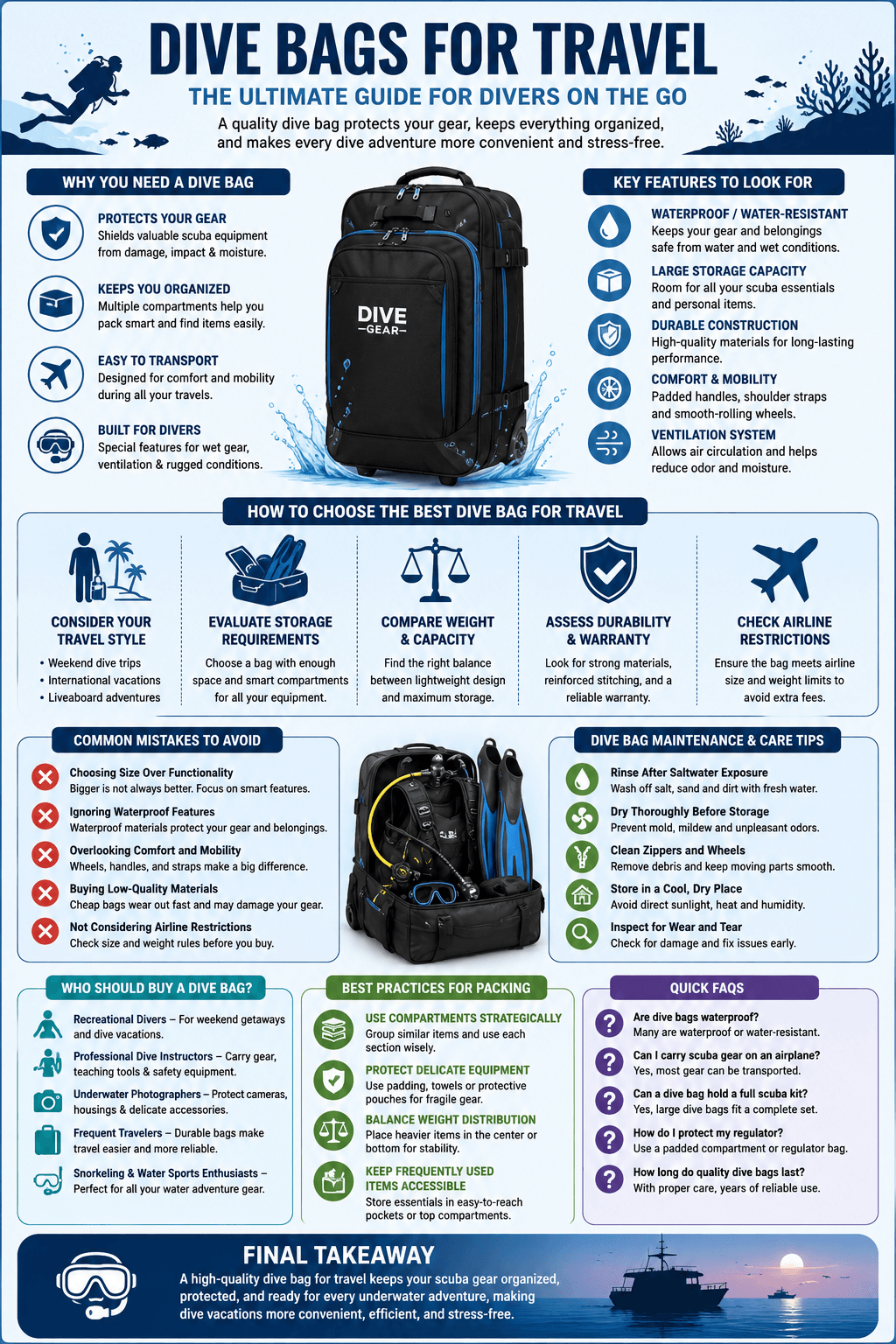
Best Dive Bags for Travel | Infographic
Frequently Asked Questions
What Size Dive Bag Do I Need for Travel?
The ideal dive bag size depends on the amount of scuba equipment you plan to carry. Divers traveling with a complete setup, including a wetsuit, fins, regulator, BCD, and accessories, typically need a large-capacity dive travel bag. For local dives or minimal gear, a compact or medium-sized bag may be sufficient.
Are Dive Bags Waterproof?
Not all dive bags are fully waterproof. Some are water-resistant and designed to repel moisture, while others feature waterproof materials and sealed compartments that provide greater protection against water exposure. Always check the product specifications before purchasing.
Can I Carry Scuba Gear on an Airplane?
Yes, most scuba diving equipment can be transported on airplanes. Many divers carry valuable items such as regulators, dive computers, and masks in their carry-on luggage, while larger items like wetsuits, fins, and BCDs are usually packed in checked baggage.
Is a Rolling Dive Bag Worth It?
A rolling dive bag is an excellent investment for divers who frequently travel with heavy equipment. Wheels make it easier to transport scuba gear through airports, hotels, and dive resorts while reducing physical strain.
How Do I Protect My Regulator During Travel?
Store your regulator in a padded compartment or protective regulator bag. Wrapping it in a towel, wetsuit, or soft clothing can provide additional cushioning and help prevent impact damage during transport.
What Is the Difference Between a Mesh and Waterproof Dive Bag?
Mesh dive bags are designed for ventilation and quick drainage, making them ideal for local dive trips and wet gear storage. Waterproof dive bags provide greater protection against water exposure and are better suited for travel, boating, and protecting personal belongings.
Can a Dive Bag Hold a Full Scuba Kit?
Many large-capacity dive bags are specifically designed to hold a complete scuba kit, including fins, wetsuits, regulators, BCDs, masks, snorkels, dive computers, and additional accessories.
How Long Do Quality Dive Bags Last?
A high-quality dive bag can last for many years when properly maintained. Bags made from heavy-duty nylon, reinforced stitching, and corrosion-resistant hardware typically offer the best long-term durability.
What Should I Look for in a Travel Dive Bag?
Key features include durable construction, waterproof or water-resistant materials, multiple compartments, large storage capacity, comfortable carrying options, ventilation systems, and airline-friendly dimensions.
Are Dive Bags Suitable for International Travel?
Yes, many dive travel bags are specifically designed for international trips. Features such as wheels, reinforced handles, lightweight materials, and organized compartments make them ideal for long-distance travel.
Can I Use a Regular Suitcase Instead of a Dive Bag?
While a regular suitcase can hold scuba gear, it often lacks specialized compartments, wet-and-dry separation, ventilation systems, and equipment protection features found in dedicated dive bags.
Do Dive Bags Have Separate Wet and Dry Compartments?
Many modern dive bags include separate wet and dry storage sections, allowing divers to keep damp gear away from clothing, electronics, and other personal belongings.
Are Dive Bags Good for Snorkeling Equipment?
Absolutely. Dive bags can easily store snorkeling gear such as masks, snorkels, fins, rash guards, and towels, making them useful for snorkelers and water sports enthusiasts.
Can I Pack a Wetsuit in a Dive Travel Bag?
Yes, dive bags are specifically designed to accommodate wetsuits. Many models offer large compartments that allow wetsuits to be packed efficiently without excessive folding.
How Much Weight Can a Dive Bag Hold?
Weight capacity varies by model and construction quality. Most heavy-duty dive travel bags are designed to handle a full scuba setup while maintaining durability and ease of transport.
Do Dive Bags Come With Wheels?
Many travel dive bags feature integrated wheels and telescopic handles, making them easier to maneuver through airports, cruise terminals, and dive resorts.
Are Dive Bags Carry-On Friendly?
Some compact dive backpacks and smaller travel dive bags meet carry-on size requirements, but larger dive luggage is generally intended for checked baggage.
How Do I Clean a Dive Bag After a Trip?
Rinse the bag thoroughly with fresh water, remove sand and debris, clean zippers and wheels, and allow it to dry completely before storage.
What Material Is Best for a Dive Bag?
Heavy-duty nylon, ripstop fabric, PVC-coated materials, and reinforced polyester are among the most durable materials used in high-quality dive bags.
Can Dive Bags Be Used for Other Outdoor Activities?
Yes. Many divers also use their bags for snorkeling, kayaking, paddleboarding, boating, beach trips, camping, and other outdoor adventures.
Do Dive Bags Help Prevent Gear Damage?
Yes, dedicated dive bags provide better protection through padded compartments, reinforced construction, organized storage sections, and equipment-specific designs.
How Do I Prevent Odors in My Dive Bag?
Allow wet gear to dry completely before packing, use ventilated compartments, rinse equipment after use, and regularly clean the interior of the bag.
What Is the Best Dive Bag for Air Travel?
The best option depends on your gear requirements, but lightweight rolling dive bags with durable construction, organized compartments, and airline-compatible dimensions are often preferred by frequent travelers.
Can I Pack Underwater Camera Equipment in a Dive Bag?
Yes, many dive bags feature padded compartments that can safely accommodate underwater cameras, housings, strobes, lights, and photography accessories.
Why Is Ventilation Important in a Dive Bag?
Ventilation promotes airflow, helps wet gear dry faster, reduces moisture buildup, minimizes odors, and lowers the risk of mildew or mold growth.
Should I Choose a Backpack or Rolling Dive Bag?
Backpack-style dive bags are ideal for mobility and adventure travel, while rolling dive bags are better suited for carrying heavier loads through airports and resorts.
Are Waterproof Dive Bags Fully Submersible?
Not always. Some are designed to resist water exposure, while others are fully waterproof and capable of protecting contents during temporary submersion. Always verify the manufacturer’s specifications.
How Many Compartments Should a Good Dive Bag Have?
A quality dive bag should have enough compartments to separate fins, masks, wetsuits, regulators, accessories, and personal belongings while maintaining easy access and organization.
Is a Dive Bag Worth the Investment?
For anyone who regularly travels with scuba or snorkeling equipment, a dedicated dive bag offers superior protection, organization, convenience, and long-term value compared to standard luggage.
Conclusion
A dedicated dive bag for travel is an essential investment for divers who want to protect their valuable scuba equipment and stay organized on every trip. Features such as durable construction, waterproof protection, spacious storage, and easy mobility help simplify packing and transportation while keeping gear safe and accessible. Whether you’re heading on a weekend dive getaway or an international diving adventure, the right dive bag enhances convenience and peace of mind.
A high-quality dive bag for travel keeps your scuba gear organized, protected, and ready for every underwater adventure, making dive vacations more convenient, efficient, and stress-free.