
Traveling today is easier than ever, but modern travel also comes with new security concerns that many people never think about. Along with crowded airports, busy train stations, and packed tourist attractions, travelers now face digital risks that go beyond traditional theft. While most people focus on protecting their luggage, wallets, and passports from physical loss, electronic theft and unauthorized scanning have become growing concerns in the age of contactless technology.
RFID bags for travel are designed to add an extra layer of protection for travelers who carry passports, credit cards, debit cards, identification cards, and other sensitive information. RFID stands for Radio Frequency Identification, a technology commonly used in contactless payment cards and electronic identification systems. These systems make daily transactions faster and more convenient, but they have also raised questions about data security and privacy during travel.
As travel becomes more connected and technology-driven, many people are searching for smarter ways to protect their personal information. This is where RFID blocking bags, anti-theft travel bags, and secure travel backpacks have gained attention. These bags are designed with special shielding materials that help block radio signals, making it more difficult for unauthorized devices to access certain RFID-enabled items stored inside protected compartments.
Another reason RFID travel bags are becoming increasingly popular is the growing awareness of digital theft risks and electronic pickpocketing concerns. Travelers often move through crowded environments where they carry passports, cards, boarding documents, smartphones, and valuable belongings all in one place. Whether you are heading on an international trip, business journey, family vacation, or weekend getaway, protecting important items has become part of modern travel planning.
However, travel security is not only about preventing theft; it is also about convenience and peace of mind. A well-designed RFID travel backpack or RFID crossbody bag can provide more than signal-blocking technology. Features such as hidden compartments, lockable zippers, cut-resistant straps, water-resistant materials, and organized storage sections make these bags practical travel companions. Instead of carrying multiple pouches and accessories, travelers can keep important belongings secure and easily accessible in one place.
In this complete guide, you will learn everything about RFID bags for travel, including how RFID blocking technology works, the benefits and limitations of RFID protection, important features to look for, and how to choose the best travel bag for your needs. Whether you are searching for a lightweight travel backpack, a secure crossbody bag, or simply want to understand if RFID protection is worth considering, this guide will help you make a more informed decision for safer and smarter travel.
Table of Contents
ToggleWhat Is an RFID Travel Bag?
An RFID travel bag is a specially designed bag that helps protect sensitive information stored in RFID-enabled items such as passports, credit cards, debit cards, identification cards, and travel documents. Unlike a regular travel bag that mainly focuses on carrying and organizing belongings, an RFID blocking bag adds an additional security layer to reduce the risk of unauthorized scanning.
Modern travelers carry multiple digital items every day, from contactless payment cards to electronic passports. This has increased the demand for RFID travel backpacks, RFID crossbody bags, anti-theft travel bags, and other secure travel accessories that combine convenience with privacy protection. These bags are designed not only for storage but also for creating a safer travel experience while moving through airports, train stations, shopping centers, and crowded tourist destinations.
Besides RFID protection, many travel bags also include practical features such as hidden pockets, lockable zippers, water-resistant materials, and cut-resistant straps, making them useful for everyday travel and long-distance trips.
Definition of RFID Technology
RFID stands for Radio Frequency Identification, a technology that uses radio waves to send and receive information between a reader and an RFID-enabled item. This technology is commonly found in contactless credit cards, passports, access cards, hotel key cards, and identification systems.
The purpose of RFID technology is to make data transfer faster and more convenient. For example, when you tap your payment card at a store terminal instead of inserting it, RFID or similar contactless technology allows the transaction to happen quickly without physical contact.
In the travel industry, RFID technology is used in several ways. Electronic passports can store identity information, airports use RFID systems for baggage tracking, and contactless payment systems simplify purchases while traveling. Although this technology improves convenience, many travelers also look for additional protection for their personal information.
How RFID Protection Works
RFID protection works by using specially designed shielding materials inside specific compartments of a bag. These materials create a barrier that helps reduce or block radio signals from reaching RFID-enabled items stored within the protected area.
When a passport, payment card, or identification card is placed inside an RFID blocking compartment, the protective layer interferes with radio frequency signals that external scanning devices rely on. This additional protection is designed to make it more difficult for unauthorized scanning attempts to access information.
Many modern travel security bags, RFID wallets, and travel backpacks with RFID protection include dedicated RFID-safe pockets instead of protecting the entire bag. This allows travelers to organize important items while keeping sensitive documents stored separately in secure compartments.
Difference Between Regular Bags and RFID Blocking Bags
A regular travel bag is mainly built to carry belongings and provide storage space. It may include multiple compartments, comfortable straps, and durable materials, but it usually does not contain any technology designed to block radio frequency signals.
An RFID blocking bag, on the other hand, combines standard travel features with added security components. Along with carrying clothes, gadgets, travel essentials, and documents, these bags include RFID-shielded sections specifically designed for items that contain digital information.
Regular travel bags often focus on style, storage capacity, and comfort, while RFID travel bags place greater emphasis on identity protection, travel security, and personal data safety. Many travelers choose RFID bags because they provide a combination of organization, convenience, and extra protection while traveling in busy environments.
9+ Best RFID Bags For Travel | Comparison Table 2026
High Quality | Great Prices | 5-Star Picks
Top 9+ Best RFID Bags For Travel | Reviews 2026
Key Features to Look for in RFID Travel Bags In 2026
Choosing the best RFID travel bag is not only about finding a stylish design or a larger storage capacity. A good travel bag should combine security, comfort, organization, and convenience to support modern travel needs. Whether you travel frequently for business, vacations, international trips, or daily commuting, the right features can make a noticeable difference in your travel experience.
Modern RFID travel backpacks, anti-theft travel bags, and secure carry-on bags are designed with smart storage solutions and protective features that help travelers keep important belongings organized and secure. Before purchasing an RFID bag, it is useful to understand which features add real value and improve travel safety.
RFID Blocking Compartments
RFID blocking compartments are one of the most important features of an RFID travel bag. These specially designed sections contain shielding materials that help reduce unauthorized access to RFID-enabled items such as passports, credit cards, debit cards, and identification cards.
Instead of applying RFID protection throughout the entire bag, many manufacturers include dedicated secure pockets where travelers can place sensitive items. This helps organize important belongings while creating a separate area for personal information protection. Travelers who frequently use contactless payment cards and electronic passports often prefer bags with multiple RFID-safe compartments.
Hidden Pockets
Hidden pockets provide an extra layer of security by keeping valuable items out of plain sight. While regular compartments are easy to access, hidden storage sections help travelers store passports, cash, travel documents, and emergency items in less noticeable locations.
Crowded places such as airports, train stations, tourist attractions, and public transportation areas can make travelers more cautious about carrying valuables. Hidden compartments reduce visibility and allow quick access to important belongings without exposing them unnecessarily.
Many anti-theft travel bags place these hidden pockets along the back panel or inside secure sections to increase protection and convenience.
Lockable Zippers
Lockable zippers are a simple but highly useful feature found in many travel security bags. These zippers are designed to work with small travel locks or built-in locking systems that make it more difficult for someone to open bag compartments without permission.
For travelers carrying laptops, cameras, documents, or valuable personal items, lockable zippers provide additional peace of mind. They can be particularly helpful during flights, hotel stays, bus travel, or crowded public places where bags may not always remain in direct view.
Cut-Resistant Straps
Cut-resistant straps are designed with reinforced materials that increase durability and provide additional security. Standard bag straps can sometimes be vulnerable to wear or damage, while reinforced designs include stronger materials intended to resist cutting attempts.
Travelers who carry shoulder bags, sling bags, or crossbody travel bags often appreciate this feature because it adds another level of protection while walking through busy locations. Strong straps also improve long-term durability, making the bag more reliable for frequent use.
Water-Resistant Material
Weather conditions can change unexpectedly during travel. Rain, accidental spills, and moisture exposure can damage electronic devices, travel documents, and personal belongings. Water-resistant materials help create a protective barrier that reduces the impact of these situations.
Many modern travel backpacks use durable fabrics designed to protect items from light rain and everyday exposure to moisture. While water-resistant material does not always mean fully waterproof protection, it can help travelers feel more comfortable carrying important belongings during outdoor activities and long trips.
Lightweight Design
A travel bag should provide storage without becoming a burden. Heavy bags can create discomfort during long airport walks, sightseeing activities, and extended travel schedules. Lightweight travel bags help reduce unnecessary strain and improve comfort.
Many travelers look for lightweight RFID travel backpacks because they allow them to carry electronics, travel essentials, clothing items, and documents while maintaining easier mobility. A lighter design can also help maximize airline carry-on limits and make packing more efficient.
Laptop Compartments
Travelers increasingly carry laptops, tablets, and digital devices during trips. Dedicated laptop compartments provide a secure and organized place for storing electronics separately from clothing and other accessories.
Padded laptop sections help reduce movement inside the bag and provide extra protection during transportation. Business travelers, remote workers, students, and digital nomads often consider laptop compartments an essential feature because they simplify organization and improve accessibility.
Organized Storage Sections
Well-organized storage compartments can make traveling easier and less stressful. Instead of searching through one large space, multiple sections allow travelers to separate passports, chargers, clothing, travel documents, water bottles, and personal accessories.
Good organization improves accessibility and saves time, especially during airport security checks or while moving between destinations. Travel bags with multiple compartments often provide a better balance between convenience and storage efficiency, helping travelers keep everything in its proper place.
Types of RFID Bags for Travel
When it comes to choosing the right RFID travel bag, there is no one-size-fits-all option. Different travelers have different needs depending on their travel style, destination, and how much they need to carry. From full-sized backpacks to compact wallets, RFID travel accessories are designed to offer anti-theft protection, RFID blocking technology, and organized storage in various forms. Understanding these types helps you choose a bag that fits your lifestyle and improves your overall travel security experience.
RFID Travel Backpack
An RFID travel backpack is one of the most popular choices for frequent travelers, business professionals, and students. It combines large storage capacity with advanced security features such as RFID blocking compartments, laptop sleeves, hidden pockets, and lockable zippers. This type of bag is ideal for long trips, airport travel, and daily commuting.
Travelers prefer RFID backpacks because they offer hands-free convenience while keeping essentials like passports, credit cards, gadgets, and documents well organized. Many modern designs also include water-resistant materials and cut-resistant straps, making them a complete solution for secure and comfortable travel.
RFID Crossbody Bag
An RFID crossbody bag is a compact and stylish option designed for travelers who prefer lightweight carrying. It is worn across the body, making it easy to access while keeping your hands free. These bags usually include RFID protected pockets for cards and passports, along with small compartments for essentials like cash, phone, and travel documents.
This type of bag is especially useful for city travel, sightseeing, and crowded places where security and quick access are both important. Many travelers choose crossbody bags for their balance between convenience, comfort, and anti-theft protection.
RFID Sling Bag
An RFID sling bag is similar to a crossbody bag but features a single strap design that sits comfortably over one shoulder. It is a popular choice for travelers who want a modern, sporty look with practical storage space. These bags often include hidden compartments, RFID shielding pockets, and organized sections for small essentials.
Sling bags are ideal for short trips, outdoor activities, and urban travel. Their lightweight structure makes them easy to carry while still providing
Benefits of RFID Travel Bags
RFID travel bags are becoming an essential part of modern travel because they combine security, convenience, and smart organization in one practical solution. Whether you are traveling internationally, commuting daily, or going on a short weekend trip, these bags are designed to make your journey safer and more comfortable. With rising concerns about digital theft, identity protection, and electronic pickpocketing, RFID bags offer a reliable way to keep your personal information secure while maintaining ease of use.
Enhanced Travel Security
One of the biggest advantages of RFID travel bags is improved travel security. These bags are designed with RFID blocking technology, anti-theft compartments, and hidden pockets that help protect your valuable items such as passports, credit cards, debit cards, and identification documents.
In crowded places like airports, bus stations, and tourist attractions, having a secure travel bag reduces the risk of theft and unauthorized access. Many travelers also prefer bags with lockable zippers and cut-resistant straps, which add an extra layer of physical protection alongside RFID shielding.
Protection Against Electronic Theft
With the rise of contactless payment systems and RFID-enabled documents, the risk of electronic theft and unauthorized scanning has become a growing concern. RFID travel bags help reduce this risk by blocking radio frequency signals that are used to access sensitive data.
This means your personal information stored in passports or cards is better protected when stored inside RFID-safe compartments. It adds peace of mind for travelers who frequently move through busy international environments where digital security matters as much as physical safety.
Better Organization
Another key benefit of RFID travel bags is improved organization. These bags are designed with multiple compartments, travel document organizers, laptop sleeves, and dedicated RFID pockets that help keep everything in place.
Instead of mixing all your belongings in one space, you can separate essentials like passports, chargers, electronics, and clothing for easy access. This level of organization is especially helpful during airport security checks and long journeys where quick access to important items is needed.
Comfortable for Long Trips
Comfort is an important factor when choosing any travel bag. RFID travel backpacks and crossbody bags are designed with ergonomic straps, lightweight materials, and balanced weight distribution to reduce strain during long hours of travel.
Whether you are walking through airports, exploring new cities, or carrying your bag for extended periods, these designs help reduce shoulder and back fatigue. The combination of comfort and security makes them ideal for both short and long-distance travel.
Suitable for Daily Use and Travel
RFID travel bags are not limited to vacations or international trips—they are also highly practical for everyday use. Many professionals, students, and frequent commuters use them as daily carry bags, work backpacks, or travel-ready accessories.
Their versatile design allows them to function as both a secure travel solution and a stylish everyday bag. With features like water-resistant material, laptop compartments, and organized storage sections, they easily adapt to different lifestyles while maintaining strong protection for personal belongings.
Potential Limitations of RFID Bags
RFID travel bags offer useful protection and convenience, but it’s important to understand their real capabilities and limitations. While they are often marketed as advanced anti-theft solutions, RFID blocking technology is only one part of overall travel security. Knowing what these bags can and cannot do helps travelers make informed decisions and avoid unrealistic expectations.
What RFID Protection Can and Cannot Do
RFID protection is designed to block or reduce unauthorized scanning of RFID-enabled items such as passports, credit cards, and ID cards. This is achieved through RFID shielding material that interferes with radio frequency signals used by scanning devices.
However, it is important to understand that RFID bags do not protect against all types of theft. They cannot stop someone from physically stealing your bag, picking your pocket, or accessing unsecured compartments. In other words, RFID protection focuses only on digital or electronic scanning risks, not physical security threats. That’s why many travelers combine RFID bags with other anti-theft features like lockable zippers and hidden pockets for complete travel safety.
Common Misconceptions
One of the most common misconceptions is that RFID bags provide full protection against all forms of identity theft. In reality, RFID blocking technology only works for specific RFID-enabled items and does not protect against online fraud, phishing, or data leaks from digital platforms.
Another misunderstanding is that all travel bags with RFID labels offer the same level of protection. In fact, the effectiveness depends on the quality of the RFID shielding material and the design of the compartments. Some bags may only include limited RFID protection in specific pockets rather than the entire bag.
Many travelers also believe they can completely avoid theft risks by using an RFID bag alone. While it adds an extra layer of safety, true travel security comes from combining multiple precautions such as awareness, secure storage, and smart travel habits.
When RFID Protection May Not Be Necessary
RFID travel bags are not essential for every type of traveler or situation. If you rarely carry RFID-enabled items like contactless cards or electronic passports, the need for RFID protection may be minimal.
For short local trips, low-risk environments, or situations where you are not carrying sensitive digital documents, a standard travel bag with good organization and durability may be sufficient. However, for international travel, busy airports, and crowded tourist destinations, many travelers still prefer RFID bags for added peace of mind and identity protection.
Ultimately, the need for RFID protection depends on your travel habits, destination, and personal preference for security and convenience.
RFID Bags vs Regular Travel Bags
When choosing the right travel bag, many travelers often compare RFID travel bags and regular travel bags to understand which option offers better protection, comfort, and overall value. While both serve the purpose of carrying essentials, they differ significantly in terms of security features, smart organization, and travel safety enhancements. Understanding these differences helps you choose a bag that matches your travel style and security needs.
Security Comparison
The biggest difference between RFID bags and regular travel bags is security. RFID travel bags are designed with RFID blocking technology, anti-theft compartments, and hidden pockets that help protect sensitive information such as passports, credit cards, and ID cards from unauthorized scanning.
Regular travel bags, on the other hand, focus mainly on storage and comfort but usually do not include protection against electronic pickpocketing or digital theft risks. While they may still offer basic safety through zippers and compartments, they lack specialized features like RFID shielding material or lockable security systems found in modern anti-theft travel bags.
Feature Comparison
RFID travel bags come with a range of advanced features designed for modern travelers. These often include RFID protected compartments, cut-resistant straps, lockable zippers, water-resistant materials, laptop sleeves, and organized storage sections.
Regular travel bags generally focus on simplicity, offering basic compartments for clothing and accessories without specialized security or digital protection features. While they may still be durable and stylish, they do not provide the same level of smart travel functionality and identity protection features found in RFID-enabled bags.
Convenience Comparison
In terms of convenience, both bag types offer practical benefits, but RFID travel bags provide a more organized and secure experience. With dedicated sections for passports, cards, electronics, and travel documents, RFID bags make it easier to access important items quickly during travel.
Regular travel bags may require more effort to organize belongings since they often lack specialized compartments. Travelers might need additional pouches or organizers to keep items separated. RFID travel backpacks and crossbody bags, however, are designed for efficient packing, quick access, and stress-free travel organization, especially during airport security checks or long journeys.
Value for Money
When it comes to value for money, RFID travel bags often provide more long-term benefits. Although they may cost slightly more than regular bags, they offer added advantages such as enhanced travel security, better organization, and protection against digital theft risks.
Regular travel bags can be more budget-friendly and suitable for basic travel needs, but they may lack the advanced features that improve safety and convenience. For frequent travelers, business professionals, or anyone concerned about identity protection and modern travel security, RFID bags are often considered a smarter long-term investment.
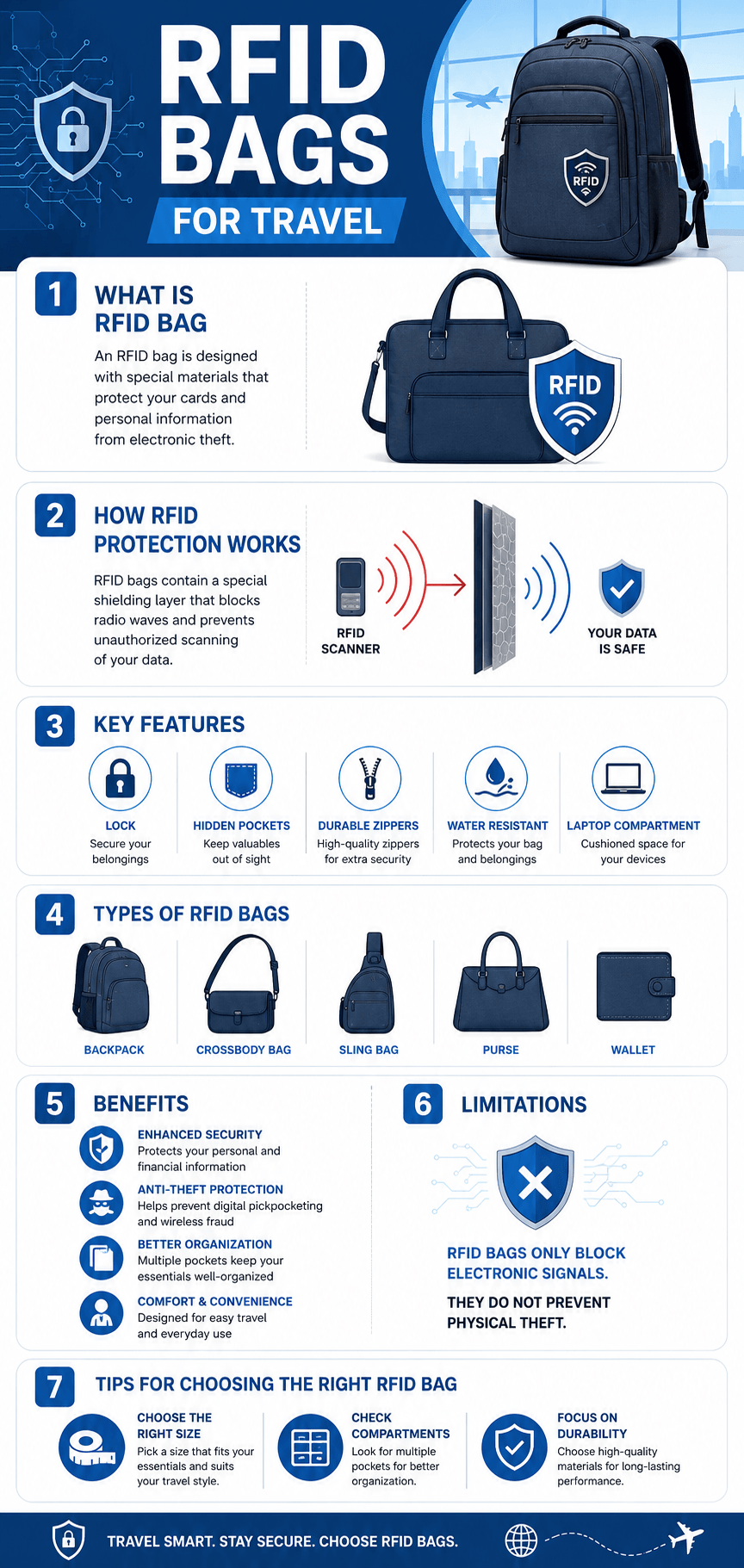
Best RFID Bags For Travel | Infographic
Frequently Asked Questions
What is an RFID travel bag?
An RFID travel bag is a specially designed travel accessory that includes RFID blocking compartments to protect sensitive information stored in passports, credit cards, debit cards, and ID cards. It uses RFID shielding material to reduce the risk of unauthorized scanning, helping travelers improve their overall travel security and identity protection while on the move.
Do RFID bags really work?
Yes, RFID bags do work, but their effectiveness depends on the quality of the RFID blocking technology and materials used. These bags are designed to block radio frequency signals that scanners use to read data from RFID-enabled cards and passports. However, they only protect against electronic scanning and do not prevent physical theft or loss of belongings.
Are RFID bags worth buying?
RFID bags are worth buying for travelers who frequently visit crowded places like airports, train stations, and tourist destinations. They provide an extra layer of anti-theft protection, digital security, and organized storage, making them a practical choice for modern travel. For people concerned about identity safety and contactless card security, they can be a valuable investment.
Can RFID bags prevent identity theft?
RFID bags help reduce the risk of certain types of identity theft by blocking unauthorized RFID scanning of personal data. However, they cannot protect against all forms of identity theft such as online fraud, phishing, or data breaches. They should be used as part of a broader travel safety and digital security strategy.
Do passports need RFID protection?
Many modern passports already include RFID chips that store personal information for faster verification at immigration checkpoints. While these chips are designed with security measures, some travelers still prefer RFID blocking passport holders or travel bags for added peace of mind, especially in crowded international travel environments.
Which RFID bag is best for travel?
The best RFID bag depends on your travel needs. A RFID travel backpack is ideal for long trips and business travel, while an RFID crossbody or sling bag is better for lightweight, everyday travel. Look for features like hidden pockets, lockable zippers, water-resistant material, and organized compartments when choosing the best option for your lifestyle.
Can RFID bags stop electronic pickpocketing?
RFID bags can help protect against electronic pickpocketing by blocking unauthorized RFID scanning attempts. This means your card and passport data stored in RFID chips are less likely to be accessed without permission. However, they do not stop physical theft, so combining them with anti-theft features like secure zippers and awareness in crowded areas is still important.
What items should be stored in RFID compartments?
RFID compartments are best used for storing passports, credit cards, debit cards, ID cards, and travel documents. These items contain RFID chips that may carry sensitive personal data, making them ideal for extra protection during travel.
Are RFID travel bags necessary for international travel?
RFID travel bags are not mandatory for international travel, but they are highly recommended for travelers who want added security, convenience, and peace of mind. They are especially useful in busy airports and tourist-heavy locations where the risk of digital theft concerns is higher.
Can I use an RFID bag every day?
Yes, RFID travel bags can be used daily. Many people use them as work backpacks, school bags, or commuter bags because they offer a combination of security, organization, and durability, along with RFID protection features.
Do all RFID bags offer the same level of protection?
No, not all RFID bags provide the same level of protection. The effectiveness depends on the quality of shielding material, the design of RFID compartments, and the overall construction of the bag. Higher-quality bags typically offer more reliable and consistent RFID blocking performance.
Conclusion
RFID bags for travel are more than just a modern travel accessory—they are a smart response to today’s evolving travel security challenges. In a world where travelers carry sensitive digital information such as passports, contactless cards, and identity documents, having an added layer of RFID blocking protection, anti-theft design, and organized storage can make a real difference in peace of mind.
Throughout this guide, we explored how RFID travel bags work, what features to look for, the different types available, and their real benefits and limitations. From RFID travel backpacks and crossbody bags to compact wallets and passport holders, each option is designed to support different travel needs while enhancing safety and convenience.
While RFID technology cannot prevent all forms of theft or fraud, it plays an important role in reducing risks related to electronic pickpocketing and unauthorized scanning. Combined with smart travel habits and secure packing practices, it helps create a safer and more comfortable journey.
Ultimately, choosing the right RFID travel bag comes down to your lifestyle, travel frequency, and personal preference for security and organization. Whether you are a frequent flyer, a business traveler, or someone planning a vacation, investing in a well-designed RFID bag can help you travel smarter, safer, and with greater confidence.