Travel photography is about capturing unforgettable moments, breathtaking landscapes, vibrant city streets, and once-in-a-lifetime adventures. But no matter how expensive your camera equipment is, it becomes vulnerable if you do not carry it in the right travel camera bag. Whether you are exploring mountain trails, navigating busy airports, or walking through crowded streets, protecting your photography gear should always be a top priority.
The best camera bag for travel does much more than simply hold your camera. A well-designed travel camera backpack keeps your DSLR or mirrorless camera safe, organizes lenses and accessories, protects equipment from weather conditions, and allows quick access when the perfect shot appears. Features such as padded compartments, adjustable dividers, waterproof materials, laptop sleeves, and tripod holders can make a significant difference during your journey.
Many photographers invest thousands of dollars in camera bodies, lenses, memory cards, and other accessories, yet often overlook the importance of a high-quality camera bag. Without proper protection, expensive equipment can suffer damage from impacts, moisture, dust, or rough handling during flights and outdoor adventures. A durable and airline-friendly camera bag helps ensure that your valuable gear remains secure wherever your travels take you.
Choosing the right camera backpack also improves comfort during long trips. Lightweight construction, ergonomic shoulder straps, and balanced weight distribution reduce fatigue, allowing photographers to focus on capturing memorable moments instead of carrying uncomfortable equipment. Whether you specialize in landscape photography, street photography, wildlife photography, or travel content creation, the right bag can significantly improve your overall experience.
In this guide, we will explore the best camera bags for travel, compare different styles, discuss essential features, and help you choose the perfect option for your photography needs. From compact sling bags to professional camera backpacks, you will discover everything you need to protect your camera gear and travel with confidence.
Why You Need a Dedicated Travel Camera Bag
A dedicated travel camera bag is not just an accessory for photographers—it is an essential part of protecting and managing valuable photography gear. Whether you are carrying a DSLR camera, a mirrorless setup, or multiple lenses, a properly designed camera backpack ensures that your equipment stays safe, organized, and ready for action throughout your journey.
Protect Camera Equipment During Travel
When traveling, your camera gear faces constant risks such as bumps, drops, pressure in overhead compartments, sudden weather changes, and rough handling at airports. A high-quality travel camera bag with padded compartments and shock-absorbing dividers provides a secure environment for your camera body, lenses, memory cards, and accessories. Many modern camera bags from brands like Peak Design and Lowepro are designed specifically to protect expensive equipment from impact, dust, and moisture. This level of protection helps extend the life of your gear and reduces the risk of costly damage.
Keep Photography Gear Organized
A well-structured photography travel bag helps you keep everything in its place. Instead of searching through cluttered compartments, you can easily access your camera body, lenses, tripod, batteries, and memory cards. Adjustable dividers allow you to customize storage based on your gear setup, making it ideal for both DSLR and mirrorless camera users. Organized storage not only saves time but also improves workflow, especially during fast-moving travel photography situations where every second counts.
Improve Accessibility While Shooting
One of the biggest advantages of a modern travel camera backpack is quick and easy access to your equipment. Many camera bags feature side openings or top-loading compartments that let you grab your camera instantly when the perfect shot appears. This is especially useful for street photography, wildlife photography, and travel vlogging, where moments can disappear in seconds. Quick-access designs ensure that you never miss important shots while keeping your gear securely stored when not in use.
Reduce Strain During Long Journeys
Carrying camera equipment for long periods can be physically demanding, especially when traveling through airports, hiking trails, or city streets. A dedicated travel camera bag is designed with ergonomic shoulder straps, breathable back padding, and balanced weight distribution to reduce strain on your shoulders and back. Lightweight construction makes it easier to carry heavy gear comfortably, allowing photographers to focus more on capturing moments rather than dealing with fatigue or discomfort.
Meet Airline Carry-On Requirements
Most professional travel camera bags are designed to meet airline carry-on size regulations, making air travel more convenient and stress-free. Instead of checking in expensive gear, photographers can safely carry their equipment onboard. This reduces the risk of loss, damage, or theft during transit. A carry-on-friendly camera backpack ensures that your DSLR, lenses, and accessories remain within reach and fully protected throughout your journey.
Types of Camera Bags for Travel
Choosing the right travel camera bag depends on your photography style, travel duration, and the amount of gear you carry. From compact sling bags to professional rolling cases, each type of camera bag offers unique advantages for protecting and organizing your photography equipment such as DSLR cameras, mirrorless cameras, lenses, and accessories.
Camera Backpacks
Camera backpacks are the most popular choice for travel photographers who carry multiple lenses, a camera body, and additional accessories. These travel camera backpacks offer large storage capacity with padded compartments, adjustable dividers, and dedicated sections for laptops, tripods, and memory cards. They are ideal for long trips, hiking adventures, and outdoor photography where comfort and gear protection are equally important. Brands like Peak Design and Shimoda are well known for designing ergonomic and weather-resistant backpacks that ensure maximum protection and convenience during travel.
Messenger Camera Bags
Messenger camera bags are perfect for photographers who prefer quick access to their gear while moving through streets, markets, or travel destinations. These bags are worn across the shoulder, allowing you to reach your camera quickly without removing the bag completely. They are lightweight, compact, and highly suitable for street photography or short travel sessions where minimal equipment is required. With easy-access compartments and organized storage, messenger bags strike a balance between style and functionality.
Sling Camera Bags
Sling camera bags are designed for photographers who want mobility and speed. These bags can be rotated from the back to the front, giving instant access to your camera without taking the bag off completely. They are ideal for day trips, city exploration, and light travel setups where you carry only essential gear such as a camera body and one or two lenses. Their compact design makes them a great choice for photographers who prioritize movement and flexibility.
Rolling Camera Bags
Rolling camera bags are the preferred option for professional photographers who travel with heavy and expensive equipment. These bags offer large storage space with reinforced protection, making them ideal for studio gear, multiple camera bodies, lenses, and accessories. Designed with wheels and telescopic handles, they reduce physical strain during airport transfers and long-distance travel. Many rolling camera bags are built to meet airline carry-on standards, ensuring your valuable gear remains secure and accessible throughout your journey.
9+ Best Camera Bag For Travel | Comparison Table 2026
Top Quality | 5 Star Picks | Best Selling
9+ Best Camera Bag For Travel | Reviews 2026
Key Features to Look for in the Best Camera Bag for Travel
When choosing the best camera bag for travel, it is important to focus on features that not only protect your camera gear but also improve comfort, accessibility, and overall travel experience. A high-quality travel camera backpack is designed to safely carry DSLR cameras, mirrorless cameras, lenses, and photography accessories while keeping everything organized and easy to access.
Padded Compartments
Padded compartments are one of the most important features in a travel camera bag because they provide essential protection for your camera body and lenses. These soft, shock-absorbing sections prevent damage from bumps, drops, and rough handling during travel. Whether you are flying, hiking, or commuting, padded interiors ensure that your expensive photography gear remains safe and secure.
Adjustable Dividers
Adjustable dividers allow you to customize the internal layout of your camera bag according to your gear setup. You can easily create separate spaces for your DSLR or mirrorless camera, multiple lenses, batteries, and memory cards. This flexible organization system is especially useful for travel photographers who frequently change equipment or carry different gear for different shooting situations.
Waterproof or Weather-Resistant Materials
Weather protection is essential for outdoor and travel photography. A good camera backpack made from waterproof or weather-resistant materials protects your gear from rain, dust, and moisture. Many professional-grade bags from brands like Lowepro and Peak Design are designed to withstand unpredictable weather conditions, ensuring your equipment stays safe in any environment.
Laptop Compartment
A built-in laptop compartment is highly useful for travel photographers who need to edit photos on the go. It allows you to securely carry your laptop or tablet alongside your camera gear, making it easier to manage files, edit images, and store backups while traveling. This feature is especially important for content creators and professional photographers.
Tripod Holder
A tripod holder adds extra convenience for photographers who shoot landscapes, long exposures, or night photography. It allows you to securely attach your tripod to the outside of the bag without affecting internal storage space. This feature ensures easy transport while keeping your hands free during travel.
Anti-Theft Features
Anti-theft features such as hidden zippers, lockable compartments, and RFID protection add an extra layer of security for your valuable camera equipment. These features are especially useful in crowded airports, public transport, and tourist locations where the risk of theft is higher.
Ergonomic Shoulder Straps
Ergonomic shoulder straps are designed to reduce strain on your shoulders and back during long journeys. Combined with breathable back padding and proper weight distribution, they make it easier to carry heavy photography gear comfortably for extended periods. This is essential for travel photographers who spend long hours exploring and shooting.
Lightweight Construction
A lightweight camera bag is crucial for travel efficiency. Heavy bags can quickly cause fatigue, especially when combined with camera gear. A well-designed lightweight travel camera backpack ensures you can carry your equipment comfortably without compromising on storage or protection.
Carry-On Compatibility
Carry-on compatibility is an important factor for air travelers. A travel camera bag that meets airline size requirements allows you to keep your DSLR, mirrorless cameras, lenses, and accessories with you at all times. This reduces the risk of damage, loss, or delay, ensuring your gear stays safe and accessible throughout your journey.
Camera Bags for Different Travel Styles
Every photographer travels differently, and the best camera bag for travel depends heavily on your shooting style, destination, and the type of camera gear you carry. Whether you are flying overseas, hiking in the mountains, or capturing city life, choosing the right travel camera backpack ensures better protection, comfort, and accessibility for your DSLR or mirrorless camera setup.
Camera Backpack for International Travel
For international travel, a spacious and secure camera backpack is the most reliable choice. These bags are designed with airline carry-on compatibility, padded compartments, and organized storage for multiple lenses, camera bodies, and accessories. A well-structured travel camera backpack helps you move through airports smoothly while keeping your photography gear safe from damage or loss. Brands like Peak Design and Nomatic are known for designing durable and travel-friendly backpacks that balance security with convenience.
Camera Bag for Air Travel
When traveling by air, safety and portability become the top priorities. A dedicated air travel camera bag is designed to fit overhead compartments or under-seat storage while protecting expensive equipment during transit. These bags often include padded dividers, weather-resistant materials, and anti-theft zippers to ensure maximum protection. They allow photographers to carry DSLR cameras, mirrorless setups, and essential accessories onboard, reducing the risk of damage or baggage delays.
Camera Bag for Hiking and Adventure Travel
For hiking and adventure photography, durability and comfort are essential. A hiking camera backpack is built with ergonomic shoulder straps, breathable back support, and weather-resistant fabric to handle rough outdoor conditions. These bags are perfect for landscape photography, wildlife photography, and long trekking trips. With secure compartments for lenses, tripods, and water bottles, they help photographers stay prepared in remote and unpredictable environments.
Camera Bag for Street Photography
Street photography requires speed, mobility, and easy access to your camera. A compact messenger or sling-style camera bag is ideal for this purpose. These bags allow photographers to quickly grab their camera without removing the entire bag, making it easier to capture spontaneous moments. Lightweight design and minimal storage ensure you can move freely through crowded streets while keeping your gear secure and ready.
Camera Bag for Mirrorless Cameras
Mirrorless cameras are more compact, so they require smaller and more flexible storage solutions. A mirrorless camera bag is designed to provide snug protection without unnecessary bulk. These bags often include adjustable dividers, quick-access openings, and lightweight construction, making them perfect for travel photographers who prefer minimal gear setups. They are ideal for city travel, vlogging, and casual photography.
Camera Bag for DSLR Cameras
DSLR cameras require more space due to their size and lens compatibility. A DSLR camera bag is built with deeper padded compartments and reinforced protection to safely carry heavy equipment. These bags are ideal for professional photographers who travel with multiple lenses, flashes, and accessories. With features like tripod holders, laptop compartments, and weather protection, they ensure complete safety and organization for high-value camera gear during travel.
Camera Gear You Should Carry While Traveling
Packing the right camera gear is just as important as choosing the best camera bag for travel. A well-organized travel camera backpack helps you safely store and easily access all your essential photography equipment, whether you are using a DSLR or mirrorless camera setup. The goal is to keep your gear protected, lightweight, and ready for any shooting opportunity during your journey.
Camera Body
Your camera body is the heart of your photography kit. Whether you are using a DSLR or a mirrorless camera, it should always be securely placed in a padded compartment of your travel camera bag. Protecting the camera body from shocks, dust, and moisture is essential, especially during air travel or outdoor adventures.
Camera Lenses
Lenses are often the most valuable and sensitive part of your photography gear. Carry a selection of lenses such as wide-angle, zoom, or prime lenses depending on your travel photography style. A good camera backpack with adjustable dividers helps you organize and protect each lens individually, preventing scratches and damage while on the move.
Tripod
A tripod is essential for landscape photography, night shots, and long-exposure photography. Many travel camera bags come with a dedicated tripod holder or external straps for easy carrying. This allows you to keep your hands free while ensuring your tripod remains secure and accessible during outdoor shoots.
Memory Cards
Memory cards store your most important memories, so carrying extras is always a smart idea. A professional travel camera bag includes small, secure pockets for memory cards to keep them safe and organized. This ensures you never run out of storage while capturing high-resolution photos or videos during your trip.
Batteries and Chargers
Extra batteries and chargers are essential for long travel days when charging options may be limited. Keeping them in a dedicated compartment within your camera bag helps you stay prepared for extended shooting sessions, especially during travel photography, hiking, or wildlife exploration.
Laptop or Tablet
A laptop or tablet is important for photographers who need to edit, organize, or back up images on the go. Many modern camera backpacks include a separate padded laptop compartment, making it easy to carry your digital workspace safely alongside your camera gear.
Cleaning Kit
Dust, dirt, and fingerprints can affect image quality, especially during outdoor photography. A compact cleaning kit with microfiber cloths, lens cleaning solution, and air blowers helps maintain your equipment in top condition. Keeping it in your camera bag ensures you can quickly clean your gear whenever needed.
Camera Accessories
Additional camera accessories such as filters, flash units, memory card readers, and cables help enhance your photography experience. A well-designed travel camera bag keeps all these small items organized in dedicated pockets, ensuring nothing gets lost and everything is easy to access when required.
How to Pack a Camera Bag for Travel
Packing your camera bag the right way is just as important as choosing the best camera bag for travel. A properly packed travel camera backpack not only protects your DSLR or mirrorless camera gear but also improves accessibility, balance, and efficiency while shooting on the go. Whether you are preparing for international travel, hiking adventures, or street photography, smart packing ensures your photography equipment stays safe and ready.
Organize Equipment Efficiently
Start by arranging your camera gear based on usage frequency. Place your camera body, primary lens, and essential accessories in the most accessible compartments of your travel camera bag. Less frequently used items like extra lenses, filters, and cables can go in deeper sections. Using a camera backpack with adjustable dividers helps you create a structured layout, making your photography gear organization more efficient and travel-friendly. This system saves time and ensures you never miss a shot during fast-moving moments.
Protect Lenses and Camera Bodies
Your camera lenses and body are the most sensitive and expensive parts of your kit, so proper protection is essential. Always store them in padded compartments with shock-absorbing dividers to prevent damage from impact or vibration during travel. Keep lenses individually separated to avoid scratches, and ensure the camera body is tightly secured. Many professional travel camera bags from brands like Peak Design and Lowepro are designed with reinforced protection systems that safeguard your gear in all travel conditions.
Balance Weight Properly
Proper weight distribution is key to comfortable travel, especially when carrying heavy photography gear. Place heavier items like camera bodies and zoom lenses closer to your back for better balance, while lighter accessories can go in outer compartments. A well-balanced camera backpack reduces strain on your shoulders and back, making it easier to carry your gear for long hours during travel photography, hiking, or city exploration.
Keep Essential Gear Accessible
When traveling, speed matters—especially in photography. Always keep essential items such as your camera body, main lens, memory cards, and batteries in quick-access compartments. Many modern travel camera bags feature side openings or top-loading designs that allow you to grab your gear instantly without fully unpacking the bag. This is especially useful for street photography, wildlife photography, and spontaneous travel shots where every second counts.
Follow Airline Regulations
If you are traveling by air, always ensure your camera bag meets airline carry-on size requirements. Keeping your DSLR or mirrorless camera gear in a carry-on approved camera backpack reduces the risk of damage, theft, or loss during transit. Store your equipment securely and avoid overpacking to stay within weight limits. A travel-friendly camera bag designed for air travel allows you to keep your valuable photography gear safe and accessible throughout your journey.
Camera Backpack vs Shoulder Bag: Which Is Better?
Choosing between a camera backpack and a shoulder bag depends on your travel style, photography needs, and how much gear you carry. Both options are popular among travel photographers, but each offers different advantages in terms of comfort, storage, accessibility, and overall travel convenience for DSLR and mirrorless camera setups.
Comfort Comparison
When it comes to comfort, camera backpacks clearly have the advantage. A travel camera backpack distributes weight evenly across both shoulders, reducing strain during long journeys, hiking trips, or airport travel. Ergonomic shoulder straps, padded back panels, and breathable materials make them ideal for carrying heavy photography gear for extended periods. On the other hand, shoulder camera bags can cause fatigue over time since the weight rests on one side of the body, making them better suited for short trips or light gear setups.
Storage Capacity
Camera backpacks offer significantly more storage space compared to shoulder bags. They are designed with multiple compartments, adjustable dividers, and dedicated sections for camera bodies, lenses, tripods, laptops, and accessories. This makes them ideal for professional photographers or travelers who carry a complete photography kit. Shoulder bags, however, are more compact and suitable for minimal gear, such as a single camera body and one or two lenses.
Accessibility
Accessibility is where shoulder bags often have the upper hand. A messenger-style camera bag allows quick and easy access to your camera without removing the entire bag, making it ideal for street photography and fast-paced shooting environments. Camera backpacks, while offering better protection and organization, may require more effort to access gear, although modern designs with side openings have improved convenience significantly.
Travel Convenience
For travel convenience, especially during long trips or air travel, camera backpacks are generally the better choice. They are designed to meet airline carry-on requirements and provide better protection for valuable equipment during transit. Shoulder bags are easier to carry for short distances but can become uncomfortable during long travel hours or crowded environments such as airports or tourist destinations.
Best Use Cases
Camera backpacks are best suited for travel photography, hiking, wildlife photography, and professional assignments where multiple lenses, accessories, and laptops are required. Shoulder bags are ideal for street photography, casual travel, and situations where mobility and quick access are more important than carrying large amounts of gear. Choosing between the two ultimately depends on your photography style and how you prefer to balance comfort, storage, and accessibility while traveling.
How to Protect Camera Gear While Traveling
Protecting your camera gear while traveling is essential for every photographer, whether you are using a DSLR or mirrorless camera system. A high-quality travel camera bag alone is not enough—you also need to pack and handle your photography equipment carefully to ensure long-lasting performance and safety during trips, outdoor shoots, and international travel.
Use Padded Dividers
Padded dividers are the first line of defense for your camera equipment. A well-designed camera backpack with adjustable padded compartments helps absorb shocks and prevents your camera body, lenses, and accessories from bumping into each other. These soft partitions keep your gear secure during flights, road trips, and hiking adventures, reducing the risk of scratches or impact damage.
Store Gear Properly
Proper storage is key to maintaining the safety of your photography equipment. Always place heavier items like camera bodies and zoom lenses in the most stable compartments of your travel camera bag, close to your back for better balance. Smaller accessories such as memory cards, batteries, and filters should be stored in separate organized pockets to avoid clutter and loss. This structured camera gear organization improves both safety and accessibility.
Avoid Moisture Exposure
Moisture is one of the biggest threats to camera equipment, especially during outdoor photography or unpredictable weather conditions. Always use a water-resistant or weather-sealed camera backpack to protect your gear from rain, humidity, and dust. Many professional travel camera bags from brands like Peak Design and Lowepro include built-in rain covers and weatherproof materials to ensure maximum protection in all environments.
Secure Valuable Equipment
Keeping your camera gear secure while traveling is crucial, especially in crowded places like airports, bus stations, or tourist attractions. Always use lockable zippers and hidden compartments to reduce the risk of theft. A dedicated travel camera bag often includes reinforced protection zones to keep expensive lenses, camera bodies, and accessories safe from unauthorized access.
Use Anti-Theft Features
Modern camera bags come with advanced anti-theft features designed for travel photographers. These include RFID-blocking pockets, lockable compartments, cut-resistant materials, and concealed openings. These features add an extra layer of security, allowing you to focus on photography without constantly worrying about your gear. For travel photography, street photography, and international trips, an anti-theft camera backpack is a smart investment for peace of mind.
Common Mistakes to Avoid When Buying a Camera Bag
Choosing the best camera bag for travel is not just about style or brand—it is about protecting your valuable photography gear and ensuring comfort during every journey. Many travel photographers, especially beginners, make avoidable mistakes that can lead to discomfort, poor organization, or even damage to expensive DSLR or mirrorless camera equipment.
Buying the Wrong Size
One of the most common mistakes is selecting a camera bag that is either too small or too large for your gear. A bag that is too small cannot properly fit your camera body, lenses, and accessories, while an oversized bag leads to unnecessary bulk and poor weight distribution. The ideal travel camera backpack should have enough space for your essential photography gear while still maintaining a compact and carry-on-friendly design.
Ignoring Comfort
Comfort is often overlooked when purchasing a camera bag, but it plays a major role in travel photography. A poorly designed bag without ergonomic shoulder straps or proper back support can cause fatigue, especially during long trips, hiking, or city walks. A high-quality camera backpack should distribute weight evenly and include padded straps and breathable materials to ensure all-day comfort while carrying heavy camera equipment.
Choosing Style Over Protection
Many photographers are attracted to stylish camera bags, but appearance should never come before protection. A travel camera bag must prioritize padded compartments, shock absorption, and secure storage for lenses and camera bodies. Brands like Peak Design and Lowepro focus on combining functionality with modern design, ensuring your gear remains safe without compromising aesthetics.
Overlooking Weather Resistance
Weather conditions can change unexpectedly during travel, especially in outdoor photography. Ignoring weather-resistant materials or waterproof protection can put your camera gear at serious risk. A reliable camera bag should include water-resistant fabric or a built-in rain cover to protect your DSLR, mirrorless camera, and lenses from rain, dust, and humidity.
Forgetting Laptop Storage
Modern travel photographers often need to edit or back up photos on the go, making laptop storage an essential feature. Many buyers forget to check for a dedicated laptop compartment in their camera bag. Without it, carrying a laptop becomes inconvenient and unsafe. A well-designed travel camera backpack includes a padded sleeve for laptops or tablets, allowing seamless editing and file management while traveling.
Purchasing a Bag Without Enough Compartments
A lack of proper compartments leads to disorganized gear, making it difficult to access equipment quickly when needed. A good camera bag should include adjustable dividers and multiple pockets for lenses, batteries, memory cards, filters, and cables. Proper organization not only improves efficiency but also helps protect your gear from scratches and damage during travel.
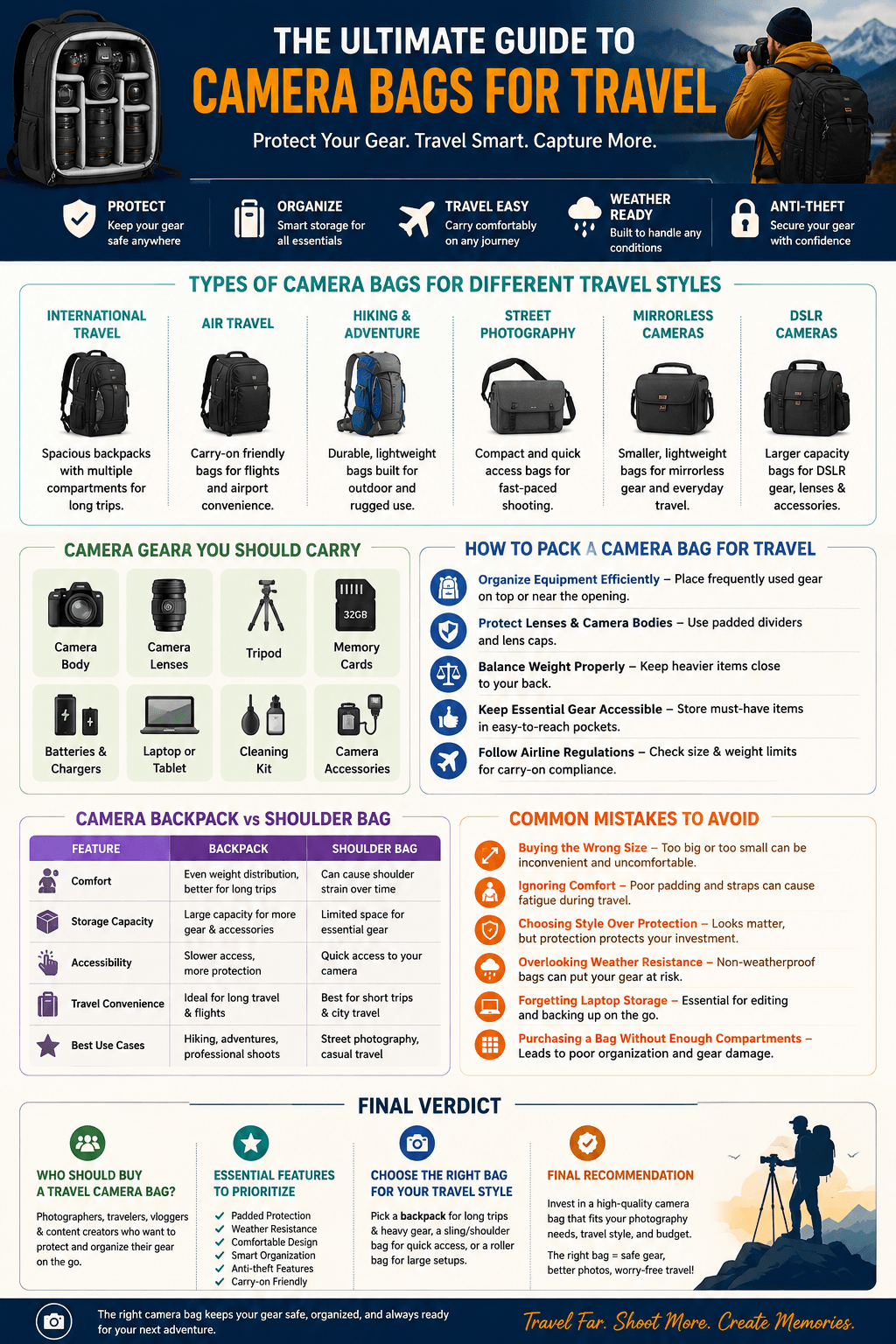
Best Camera Bag For Travel | Infographic
Frequently Asked Quetions
What is the best camera bag for travel?
The best camera bag for travel is one that balances protection, comfort, and organization for your photography gear. A high-quality travel camera backpack with padded compartments, adjustable dividers, weather-resistant material, and a dedicated laptop sleeve is generally considered the most versatile option. Brands like Peak Design and Lowepro are popular among travel photographers because they offer durable, airline-friendly designs that safely carry DSLR or mirrorless camera setups along with lenses and accessories.
Are camera backpacks allowed on airplanes?
Yes, most camera backpacks are allowed on airplanes as carry-on luggage as long as they meet airline size and weight restrictions. In fact, many travel camera bags are specifically designed to fit under the seat or in overhead compartments. Carrying your camera gear onboard is recommended because it reduces the risk of damage, theft, or loss during checked baggage handling.
Can a camera bag be used as carry-on luggage?
Yes, a camera bag can usually be used as carry-on luggage if it complies with airline regulations. Most modern travel camera backpacks are designed with carry-on compatibility in mind, allowing photographers to safely transport their DSLR cameras, mirrorless cameras, lenses, and accessories. Always check your airline’s size limits before traveling to ensure a smooth experience.
What size camera bag is best for travel?
The best size for a travel camera bag depends on how much gear you carry. For minimal setups, a compact sling or messenger bag is enough, while professional photographers may need a medium or large camera backpack. The ideal travel camera bag should be spacious enough to hold your essentials but compact enough to remain comfortable and airline-friendly.
Is a camera backpack better than a shoulder bag?
In most cases, a camera backpack is better for travel because it offers greater comfort, storage capacity, and weight distribution. Shoulder bags, however, provide faster access to your camera, making them suitable for street photography or short trips. If you travel with multiple lenses and accessories, a backpack is usually the more practical choice.
How do photographers carry cameras while traveling?
Photographers typically carry cameras using travel camera backpacks, sling bags, or messenger bags depending on their shooting style. Backpacks are preferred for long trips and heavy gear, while sling bags are used for quick access and light setups. Professional travel photographers often organize their gear using padded dividers to ensure safety and easy accessibility during movement.
What features should a travel camera bag have?
A good travel camera bag should include padded compartments, adjustable dividers, waterproof or weather-resistant material, ergonomic shoulder straps, a laptop compartment, and tripod holders. Anti-theft features such as lockable zippers and hidden pockets are also important for added security, especially when traveling internationally or in crowded areas.
How do you protect camera equipment during travel?
Protecting camera equipment during travel requires proper packing and handling. Always use a camera bag with padded dividers to separate lenses and camera bodies, avoid exposure to moisture, and secure your gear tightly inside the bag. Keeping batteries, memory cards, and accessories in organized compartments also helps prevent damage and ensures your equipment stays safe throughout your journey.
What is the difference between DSLR and mirrorless camera bags?
DSLR camera bags are generally larger and deeper because DSLR cameras and lenses are bulkier. Mirrorless camera bags, on the other hand, are more compact and lightweight since mirrorless systems are smaller. However, many modern travel camera backpacks are designed to accommodate both types with adjustable internal layouts.
Can I carry a laptop in a camera bag?
Yes, many modern travel camera bags include a dedicated padded laptop compartment. This allows photographers to carry laptops or tablets safely along with their camera gear, making it easier to edit photos, back up files, and manage content while traveling.
What is the best camera bag for hiking and travel photography?
For hiking and outdoor travel photography, a durable and weather-resistant camera backpack is the best choice. It should include ergonomic support, breathable back padding, and secure storage for lenses, tripod, and water bottles. These features help photographers carry gear comfortably over long distances while protecting equipment from harsh outdoor conditions.
How much camera gear should I carry while traveling?
It is best to carry only essential camera gear while traveling to avoid unnecessary weight. A typical travel setup includes one camera body, two lenses, extra batteries, memory cards, and a lightweight tripod. Keeping your kit minimal ensures better mobility, comfort, and quicker access to equipment when capturing moments.
Are waterproof camera bags necessary?
Yes, waterproof or weather-resistant camera bags are highly recommended for travel photography. They protect your DSLR or mirrorless camera gear from rain, humidity, dust, and accidental spills. Even if you are not traveling to extreme environments, unpredictable weather makes waterproof protection a valuable feature.
How do I organize my camera bag efficiently?
To organize your camera bag efficiently, place your camera body and primary lens in the most accessible compartment, followed by secondary lenses and accessories. Use adjustable dividers to create dedicated spaces for each item. Keeping frequently used gear in quick-access sections helps improve workflow and ensures you never miss a shot while traveling.
Final Verdict
A travel camera bag is essential for anyone who carries photography gear such as DSLR or mirrorless cameras during trips. It is ideal for travel photographers, vloggers, and content creators who need safe, organized, and easy access to their equipment on the go.
When choosing the best camera bag for travel, prioritize padded protection, adjustable compartments, weather resistance, comfortable straps, and carry-on compatibility. These features ensure your camera gear stays safe, organized, and travel-ready in any situation.
The right choice depends on your travel style—camera backpacks are best for long trips and heavy gear, while sling or messenger bags suit light, fast-paced shooting. Rolling bags are ideal for professionals carrying multiple setups.
In short, invest in a bag that matches your photography needs, protects your equipment, and supports your travel comfort. A well-chosen camera bag enhances your workflow and lets you focus on capturing moments, not worrying about your gear.