Traveling across Europe is an unforgettable experience filled with stunning cities, historic streets, scenic train rides, and nonstop adventures. Whether you are exploring the romantic streets of Paris, backpacking through Amsterdam, or hopping between countries by train, one thing can make your journey either smooth or stressful — choosing the best travel bag for Europe.
Many travelers underestimate how important the right luggage can be until they find themselves dragging a heavy suitcase over uneven cobblestone streets, squeezing oversized bags into crowded train compartments, or paying extra baggage fees on budget European airlines. Europe travel is very different from a typical vacation because it often involves frequent movement, walking tours, public transportation, airport transfers, and compact accommodations. That is why selecting the right Europe travel bag is not just about style — it is about comfort, convenience, security, and efficiency.
Unlike traditional vacations where you stay in one hotel, European travel usually includes city hopping, train travel, and long walking distances. A bulky suitcase may seem practical at first, but navigating narrow streets, stair-heavy subway stations, and busy tourist areas can quickly become exhausting. This is why many experienced travelers prefer lightweight travel backpacks, compact carry-on luggage, or anti-theft travel bags designed specifically for international travel.
One of the biggest challenges travelers face in Europe is dealing with cobblestone streets. While these historic streets add charm to destinations like Rome and Barcelona, they are not friendly to cheap wheels or oversized luggage. A durable travel backpack or a high-quality rolling suitcase with smooth spinner wheels can make a huge difference when moving between hotels, train stations, and airports.
Security is another important factor when traveling through crowded tourist destinations and public transportation hubs. Popular European cities attract millions of tourists every year, making pickpocket prevention a top priority. This is why anti-theft travel bags with RFID protection, lockable zippers, hidden pockets, and slash-resistant materials are becoming increasingly popular among modern travelers. Keeping passports, credit cards, electronics, and valuables secure provides peace of mind while exploring busy attractions and transportation systems.
Ultimately, the best travel bag for Europe depends on your travel style, trip duration, and personal preferences. Some travelers prefer minimalist carry-on backpacks for flexibility and mobility, while others choose rolling luggage for added storage and organization. The key is finding a travel bag that combines lightweight design, durability, comfort, security, and carry-on compatibility into one practical solution.
In this guide, we will explore the best travel bags for Europe, compare backpacks and suitcases, discuss essential features to look for, and help you choose the perfect travel companion for your next European adventure. Whether you are planning a weekend city escape, a backpacking trip across multiple countries, or a long-term European vacation, the right travel bag can completely transform your travel experience.
Why You Need the Right Travel Bag for Europe
Traveling across Europe is exciting, but it can also become physically exhausting if you carry the wrong luggage. Unlike traditional vacations where travelers stay in one place, Europe trips usually involve moving from one city to another through trains, buses, flights, and walking tours. Because of this, choosing the best travel bag for Europe becomes one of the most important travel decisions you can make.
A good travel bag is more than just storage space. It directly affects your comfort, mobility, travel efficiency, and overall experience. Whether you are exploring historic neighborhoods, catching trains between countries, or navigating crowded airports, the right luggage can make your journey smoother, lighter, and stress-free.
Importance of Mobility During European Travel
Mobility is one of the biggest factors travelers often overlook when planning a Europe trip. European cities are designed differently compared to many modern destinations. Narrow streets, stair-heavy train stations, old buildings without elevators, and crowded public transportation systems make heavy luggage extremely inconvenient.
Many travelers quickly realize that dragging oversized suitcases through busy streets or carrying bulky bags across train platforms can ruin the travel experience. This is why experienced travelers usually choose compact travel gear that is easy to carry, lightweight, and suitable for constant movement.
A lightweight travel backpack or airline-approved carry-on bag allows travelers to move freely between destinations without unnecessary strain. Whether you are boarding a train in London or walking through the historic streets of Rome, mobility becomes essential for comfortable travel.
The ability to move quickly also helps during airport transfers, hotel check-ins, and crowded tourist areas. Lightweight luggage reduces physical stress and gives travelers greater flexibility during their journey.
Backpack vs Suitcase Debate
One of the most common questions travelers ask is whether a backpack or suitcase is better for Europe travel. The answer depends largely on your travel style, trip duration, and personal comfort preferences.
Travel backpacks are often considered the best option for backpacking Europe, train travel, and multi-city trips. They are easier to carry on uneven roads, stairs, and public transportation systems. Modern travel backpacks also include ergonomic shoulder straps, laptop compartments, anti-theft pockets, and organized storage systems that improve travel convenience.
A lightweight travel backpack is especially useful for travelers who plan to walk frequently or move between destinations every few days. Backpack travelers enjoy better mobility and flexibility, especially when exploring older European cities with cobblestone streets.
On the other hand, rolling suitcases provide better organization and are ideal for travelers who prefer structured packing. Suitcases work well for short city vacations, luxury travel, or business trips where travelers stay in hotels with elevators and smoother transportation access.
However, large suitcases can become difficult to manage in crowded train stations, narrow staircases, and uneven streets. Many travelers struggle with cheap wheels or oversized luggage while navigating European transportation systems.
For this reason, many people now prefer hybrid solutions such as wheeled backpacks or compact carry-on luggage that combines convenience, organization, and portability.
How European Transportation Affects Luggage Choices
Transportation plays a huge role in determining the best carry-on luggage for Europe. Unlike destinations where taxis are the primary mode of travel, Europe heavily relies on trains, subways, buses, trams, and walking.
Train travel is one of the most popular ways to explore Europe because it is fast, scenic, and convenient. However, train stations often require travelers to carry their own bags up stairs, through busy platforms, and into compact luggage storage spaces. This is where train friendly luggage becomes extremely important.
A compact travel bag with lightweight construction allows travelers to board trains easily without struggling in crowded areas. Many experienced travelers prefer cabin-size backpacks because they fit into overhead compartments and reduce the stress of carrying oversized luggage.
Budget airlines across Europe also influence luggage choices. Airlines often enforce strict baggage policies, and travelers can face expensive fees for oversized suitcases. Choosing the best carry-on luggage for Europe helps avoid unnecessary costs while improving travel convenience.
Additionally, European public transportation systems are often crowded during peak travel seasons. A small, lightweight, and organized travel bag allows travelers to move comfortably through subway stations, buses, and airports without feeling restricted.
Why Lightweight and Compact Bags Are Preferred
Lightweight and compact bags are preferred by experienced travelers because they make every part of the journey easier. From airport security checks to train station transfers, smaller luggage improves flexibility and reduces physical fatigue.
A lightweight travel backpack is ideal for travelers who want convenience without sacrificing storage space. Modern travel bags now include smart organization systems, compression straps, expandable compartments, and hidden security pockets that maximize efficiency while maintaining a compact size.
Compact travel gear also helps travelers pack smarter instead of overpacking unnecessary items. This encourages efficient packing habits, which is especially important during long-term Europe trips or multi-country vacations.
Another advantage of lightweight luggage is comfort during walking tours. Europe is best explored on foot, whether you are visiting museums, exploring local markets, or wandering through historic city centers. Carrying a heavy bag for hours can quickly become uncomfortable and exhausting.
Security is another reason compact bags are preferred. Smaller anti-theft backpacks with RFID protection, hidden zippers, and secure compartments are easier to manage in crowded tourist areas and public transportation systems.
Ultimately, the best travel bag for Europe should balance mobility, comfort, durability, organization, and security. A well-designed carry-on backpack or compact suitcase can make traveling through Europe far more enjoyable while reducing stress throughout the journey.
9+ Best Travel Bags for Europe | Comparison Table 2026
High Quality | Great Prices | 5-Star Picks
Top 9+ Travel Bags for Europe | Reviews 2026
Key Features to Look for in the Best Travel Bag for Europe
Lightweight Design
A lightweight travel backpack is one of the most important factors when choosing the best travel bag for Europe. Since European travel involves constant movement between airports, train stations, and city streets, every extra kilogram matters. A lighter bag reduces physical strain and makes it easier to navigate stairs, cobblestone streets, and long walking tours. It also improves easy airport mobility, especially when dealing with strict baggage checks or long transfer routes. Choosing compact travel gear with a smart weight balance ensures a more comfortable and stress-free journey.
Carry-On Compatibility
Carry-on compatibility is essential for avoiding extra fees and travel delays. Most European airlines follow strict cabin-size luggage rules, so selecting a bag that meets these requirements is crucial. A good carry-on backpack or suitcase should fit overhead compartments and comply with airline restrictions. This is especially useful for budget airlines where luggage policies are strict. Cabin-size luggage not only saves money but also improves convenience during short layovers and frequent city hopping across Europe.
Anti-Theft Security Features
Security is a major concern when traveling through crowded European cities. A high-quality travel bag should include anti-theft features such as RFID protection, hidden compartments, and lockable zippers. These features help protect your valuables like passports, credit cards, and electronics from pickpockets. An anti pickpocket backpack is especially useful in busy tourist areas, train stations, and public transport. Secure zipper systems and discreet pockets add an extra layer of safety, making your travel experience more relaxed and worry-free.
Waterproof & Durable Materials
Weather in Europe can be unpredictable, so waterproof travel backpacks and durable materials are essential. A strong travel bag should protect your belongings from rain, spills, and rough handling during transit. High-quality fabrics and reinforced stitching ensure long-term durability, making the bag suitable for multiple trips. Whether you’re exploring rainy cities or snowy regions, weather-resistant luggage keeps your essentials safe and dry throughout your journey.
Storage & Organization
A well-organized travel bag makes packing and unpacking much easier. Features like packing cubes compatibility, laptop compartments, and expandable storage help create an efficient packing system. Organized travel storage compartments allow you to separate clothes, electronics, and toiletries for quick access. This is especially useful for long trips where staying organized saves time and reduces stress during travel transitions.
Comfort & Ergonomics
Comfort is a key factor when choosing the best travel bag for Europe, especially for travelers who walk long distances. Padded shoulder straps, breathable back panels, and adjustable chest straps help distribute weight evenly and reduce pressure on the body. Ergonomic designs are essential for long walking tours, train travel, and city exploration. A comfortable travel backpack ensures you can carry your essentials without fatigue, making your overall travel experience more enjoyable.
Types of Travel Bags for Europe
Travel Backpacks
Travel backpacks are one of the most popular choices for Europe because they offer unmatched flexibility for backpacking, city hopping, and long-distance travel. Whether you are exploring multiple countries or moving between cities like Paris and Amsterdam, a well-designed backpack makes movement effortless and stress-free.
One of the biggest advantages of travel backpacks is their ergonomic shoulder straps, which distribute weight evenly across your back and shoulders. This makes them ideal for long walking tours, crowded train stations, and uneven cobblestone streets where rolling luggage becomes difficult to handle. Many modern backpacks also come with breathable back panels and adjustable chest straps, improving comfort during extended travel days.
Travel backpacks are especially ideal for budget travelers and backpackers who prefer compact travel gear that fits airline cabin restrictions. With features like laptop compartments, anti-theft pockets, and expandable storage, they offer a perfect balance of convenience and practicality. For travelers who prioritize easy airport mobility and lightweight packing, backpacks remain one of the best choices for Europe trips.
Rolling Suitcases
Rolling suitcases are a preferred option for travelers who value structure, organization, and a more traditional luggage style. They work especially well for short city breaks, luxury vacations, and business trips where mobility demands are lower.
In destinations like Rome or Barcelona, rolling suitcases can be convenient when sidewalks are smooth and transportation access is easy. However, cobblestone streets, stairs, and older train stations across Europe can make them challenging to manage.
The main advantage of suitcases is their organized packing system, allowing travelers to neatly separate clothes, shoes, and accessories. Spinner wheels also improve maneuverability in airports and hotels. On the downside, they may not be the best option for travelers who require train friendly luggage or frequent city hopping, as uneven terrain can reduce mobility and increase physical effort.
Duffel Bags
Duffel bags offer a flexible and lightweight travel solution that appeals to minimalist travelers and weekend explorers. Their soft structure allows easy storage in overhead compartments, under seats, or in tight luggage spaces, making them a practical option for quick Europe trips.
These bags are especially useful for weekend getaways, short business trips, or low-budget travel plans where compact travel gear is preferred. Duffel bags can be carried by hand or worn over the shoulder, offering versatility depending on travel conditions.
However, while they are lightweight and easy to carry, duffel bags often lack structured compartments, which can make organization more challenging. For travelers who prefer simplicity and flexibility over rigid packing systems, they remain a solid choice for short European adventures.
Crossbody & Anti-Theft Bags
Crossbody and anti-theft bags are essential travel companions for securing valuables during Europe trips. These bags are designed specifically to keep passports, phones, credit cards, and important documents safe in crowded environments.
In busy tourist destinations like London, where pickpocketing risks are higher, anti-theft bags provide peace of mind through features such as RFID protection, lockable zippers, and hidden compartments. These security-focused designs make them a must-have for modern travelers.
Crossbody bags are also incredibly convenient for daily sightseeing. They offer easy access to essentials without the need to carry a large backpack or suitcase. This makes them perfect for walking tours, public transportation, and quick city exploration.
For travelers who prioritize anti pickpocket backpack alternatives and secure storage solutions, these compact bags are ideal companions. They enhance easy airport mobility and ensure valuables remain protected while traveling through busy European destinations.
Backpack vs Suitcase for Europe
Choosing between a backpack and a suitcase is one of the most important decisions when planning a Europe trip. The right choice depends on your travel style, transportation plans, and how much mobility you need. Since Europe is known for train travel, cobblestone streets, and frequent city hopping, this decision directly impacts your comfort and overall travel experience.
Benefits of Backpacks
Backpacks are widely preferred by travelers who prioritize flexibility, comfort, and movement efficiency. One of the biggest advantages is that they are much easier to carry on stairs, uneven roads, and narrow European streets. Whether you are exploring historic areas or walking between train stations, a lightweight travel backpack offers better balance and freedom of movement.
Backpacks are especially useful for train travel across Europe. Many stations require travelers to carry luggage up and down stairs or quickly move between platforms. A compact travel backpack allows you to stay mobile without struggling with heavy wheels or bulky luggage.
They are also ideal for travelers who prefer easy airport mobility and want to avoid delays caused by oversized baggage. With features like ergonomic shoulder straps, anti-theft compartments, and organized storage, backpacks are perfect for long walking tours and multi-city Europe trips.
Benefits of Suitcases
Suitcases are a great choice for travelers who prefer structure, organization, and a more professional travel setup. They offer well-defined compartments that make packing clothes, shoes, and accessories much easier and more organized compared to soft bags.
Another advantage is their polished and professional appearance, making them suitable for business travel or luxury vacations. Spinner wheels also provide smooth movement in airports, hotels, and modern transport hubs where surfaces are even and accessible.
For travelers who value organized packing systems and minimal physical effort in controlled environments, suitcases remain a reliable option.
Which One is Better for Your Travel Style?
The choice between a backpack and suitcase ultimately depends on your travel style and trip type.
For backpacking trips, a lightweight travel backpack is the best option. It supports constant movement, easy carrying, and flexibility when exploring multiple cities like Paris or Amsterdam. It is perfect for budget travelers and those who prefer a minimalist lifestyle on the road.
For family vacations, suitcases are often more practical. They allow better organization of clothes and essentials for multiple travelers and are easier to manage in hotels and resorts where space and accessibility are not an issue.
For business travel, suitcases are usually the preferred choice. They offer a professional appearance and structured packing, which is ideal for carrying formal outfits, electronics, and documents in an organized way.
For digital nomads, the decision depends on mobility needs. Many digital nomads prefer hybrid solutions like wheeled backpacks or compact carry-on luggage that combines flexibility with organization. This allows them to work and travel efficiently while maintaining lightweight travel gear suitable for frequent movement.
Ultimately, the best travel bag for Europe depends on how you plan to move, what you pack, and how much comfort versus structure you need during your journey.
Best Travel Bags for Different Europe Trips
Every Europe trip is different, and so is the type of travel bag you need. From fast-paced city hopping to relaxed weekend escapes, choosing the right luggage can significantly improve your comfort, mobility, and overall travel experience. The best travel bags for Europe are those that match your journey style, transportation method, and packing needs.
Best Bag for Backpacking Across Europe
For backpacking adventures across Europe, a lightweight travel backpack is the most practical choice. Backpackers often move between multiple countries like Paris and Barcelona, making mobility the top priority.
A durable backpack with ergonomic shoulder straps, anti-theft compartments, and expandable storage is ideal for long-distance travel. It allows easy airport mobility, smooth train travel, and comfortable walking through cobblestone streets. This type of compact travel gear is perfect for budget travelers who want freedom without the burden of heavy luggage.
Best Bag for Train Travel in Europe
Train travel is one of the most popular ways to explore Europe, and it requires train friendly luggage that is easy to carry, lift, and store. A medium-sized travel backpack or wheeled carry-on suitcase works best for this purpose.
Since train stations often involve stairs, crowded platforms, and quick transfers, lightweight luggage is essential. A well-organized travel bag with quick-access compartments ensures smooth movement during transitions. This makes your journey more efficient, especially when traveling through busy hubs like Amsterdam or Rome.
Best Bag for Weekend Europe Trips
For short weekend getaways, a compact duffel bag or small carry-on backpack is the perfect choice. These bags are lightweight, flexible, and easy to pack, making them ideal for 2–3 day trips.
Weekend travelers usually prefer minimalist packing, so a bag with enough space for essentials, clothing, and travel documents is sufficient. A small travel bag also helps with easy airport mobility and quick hotel check-ins, making short trips more convenient and stress-free.
Best Bag for Long-Term Europe Travel
Long-term Europe travel requires a durable, spacious, and highly organized travel bag. A large backpack or hybrid wheeled backpack is often the best choice for extended trips.
These bags typically include multiple compartments, laptop sleeves, compression straps, and expandable storage, making them ideal for efficient packing solutions. Travelers who stay for weeks or months need luggage that supports comfort, durability, and flexibility while moving between countries.
For long-term travelers, balancing comfort and storage is essential, especially when exploring multiple cities and adapting to different climates across Europe.
Best Bag for Budget Airlines
Budget airlines in Europe are strict about luggage size and weight, making cabin-approved travel bags essential. A lightweight travel backpack or personal item bag is often the best option.
These bags are designed to fit under seats or in overhead compartments while avoiding extra baggage fees. Features like compact design, secure zipper pockets, and organized storage make them perfect for frequent flyers using low-cost airlines.
A well-designed personal item bag for Europe flights ensures you can travel efficiently without worrying about airline restrictions.
How to Pack a Travel Bag for Europe
Packing for a Europe trip is not just about fitting everything into a bag—it’s about smart planning, efficient organization, and choosing the right essentials for comfort and mobility. Whether you’re using a lightweight travel backpack or compact carry-on luggage, a well-structured packing strategy can make your journey smoother, lighter, and stress-free.
Packing Essentials
Before you start packing, it’s important to focus on the essentials that will keep you comfortable and prepared throughout your Europe trip. A good packing plan ensures you don’t overpack while still having everything you need.
Clothing organization is the first step. Choose versatile outfits that can be mixed and matched easily. Lightweight, breathable clothing works best for changing weather conditions across different countries like Paris or Rome.
Toiletries should be packed in travel-sized containers to save space and meet airline restrictions. Keeping them in a waterproof pouch helps avoid spills and keeps your bag clean.
Electronics are another key part of modern travel. Items like phones, chargers, power banks, and adapters should be organized in a separate compartment for easy access during airport checks and daily use.
Travel documents are extremely important. Passports, tickets, insurance papers, and ID copies should always be kept in a secure and easily reachable pocket, preferably in an anti-theft section of your bag.
Packing Tips
Smart packing techniques can completely change your travel experience. One of the most effective methods is using packing cubes. They help create an organized packing system, allowing you to separate clothes, accessories, and essentials into structured compartments.
Rolling clothes instead of folding them is another proven method to save space and reduce wrinkles. This technique is especially useful when using compact travel gear or cabin-size backpacks.
Keeping valuables secure is also essential during Europe travel. Use hidden compartments or anti-theft pockets to store passports, wallets, and electronics safely, especially in crowded tourist areas and public transportation.
These simple strategies create a more efficient packing solution that maximizes space while keeping everything organized and easy to access.
Common Packing Mistakes to Avoid
Many travelers make avoidable mistakes when preparing for a Europe trip. One of the most common is overpacking. Carrying too many unnecessary items increases weight and reduces mobility, especially when traveling between cities.
Another mistake is ignoring airline baggage restrictions. Budget airlines in Europe often have strict size and weight limits, so not checking requirements beforehand can lead to extra charges or repacking at the airport.
Poor organization is also a frequent issue. Without a structured travel storage system, it becomes difficult to find important items quickly during transit or hotel check-ins.
Lastly, failing to secure valuables properly can lead to stress and potential loss. Always prioritize safety features like RFID protection, lockable zippers, and hidden pockets in your travel bag.
A well-planned packing approach ensures a smoother journey, better comfort, and a more enjoyable Europe travel experience overall.
Travel Bag Safety Tips for Europe
Safety is one of the most important aspects of any Europe trip, especially when you are traveling through busy tourist cities, crowded train stations, and popular attractions. Choosing the right travel bag is not only about comfort and style—it is also about protecting your belongings from theft, loss, and unnecessary risk.
Avoiding Pickpockets
Pickpocketing is one of the most common travel concerns in major European cities. Busy areas such as metro stations, tourist landmarks, and crowded streets require extra attention to your belongings. Cities like Barcelona and Paris are beautiful but also known for high tourist activity, which makes awareness essential.
To stay safe, always keep your bag in front of you in crowded places and avoid placing valuables in easily accessible outer pockets. A secure travel backpack with anti-theft features like hidden zippers and lockable compartments can significantly reduce the risk of theft. Staying alert and minimizing distractions is one of the simplest yet most effective ways to protect yourself.
Using RFID-Blocking Compartments
Modern travel bags often include RFID-blocking technology, which helps protect your credit cards, passports, and personal data from electronic theft. This feature is especially useful in busy airports, train stations, and tourist hotspots where digital scanning risks may exist.
An RFID travel bag or wallet ensures that your sensitive information remains safe while you focus on enjoying your trip. Many lightweight travel backpacks now include dedicated RFID compartments, combining convenience with advanced security. This makes them an essential part of an efficient packing system for international travel.
Keeping Valuables Secure in Crowded Areas
When traveling through crowded areas, it is important to store your valuables in secure and hidden compartments. Items such as passports, wallets, phones, and travel documents should always be placed in anti-theft pockets that are not easily visible or accessible.
Crossbody bags and anti pickpocket backpacks are especially useful for this purpose. They allow you to keep your essentials close while maintaining easy airport mobility and comfort during long walking tours. Using travel bags with lockable zippers and hidden storage spaces adds an extra layer of protection in busy environments.
Safety During Public Transportation
Public transportation is one of the most convenient ways to explore Europe, but it also requires careful attention to your belongings. Whether you are traveling on trains, buses, or subways, always keep your bag close and within sight.
Train stations in cities like Amsterdam and Rome can get crowded during peak hours, making it important to use secure travel gear designed for mobility and protection. Keep your bag in front of you when seated and avoid placing valuables in overhead racks when possible.
A well-designed travel bag with organized compartments, durable zippers, and anti-theft features ensures a safer and more stress-free journey. By combining awareness with the right luggage choice, you can enjoy your Europe trip with confidence and peace of mind.
How to Choose the Perfect Travel Bag for Your Needs
Choosing the right travel bag for a Europe trip is not just about looks—it’s about matching your luggage with your travel style, comfort needs, and mobility requirements. The best travel bag for Europe should support smooth movement, efficient packing, and secure storage while adapting to different travel situations like trains, flights, and walking tours.
Consider Your Trip Length
Your trip duration plays a major role in selecting the right luggage. For short weekend trips, a compact travel bag or small carry-on backpack is usually enough. It keeps packing simple and lightweight, perfect for quick getaways.
For longer journeys across multiple countries, a larger travel backpack or expandable luggage is more suitable. It provides enough space for clothing, toiletries, and travel essentials while maintaining an organized packing system. Longer trips also require better storage compartments and travel storage organization to avoid overpacking.
Think About Transportation
Transportation is one of the most important factors when traveling through Europe. If your journey includes frequent train travel, walking tours, and city hopping, a lightweight travel backpack is often the best choice. It offers easy airport mobility and is comfortable for carrying through stairs, platforms, and cobblestone streets in cities like Paris or Rome.
If your travel style involves taxis, hotels, and smoother transport, a rolling suitcase may work better. However, for mixed transportation modes, many travelers prefer hybrid luggage that combines wheels and backpack straps for maximum flexibility.
Check Airline Restrictions
European airlines, especially budget carriers, have strict luggage size and weight limits. Before choosing your travel bag, always check cabin baggage requirements to avoid extra fees or last-minute repacking at the airport.
A cabin-approved carry-on bag or personal item backpack is ideal for frequent flyers. Lightweight and compact designs ensure you can travel stress-free while staying within airline restrictions. This is especially important for travelers who rely on low-cost flights between European destinations.
Choose Between Style & Functionality
When selecting a travel bag, it’s important to balance style with functionality. Some travelers prefer sleek and professional-looking suitcases, while others prioritize rugged and practical backpacks designed for long walking tours.
Functional features such as anti-theft compartments, RFID protection, waterproof materials, and ergonomic straps enhance travel comfort and security. On the other hand, stylish designs may be more suitable for business trips or luxury travel experiences.
The key is to choose a bag that supports both your aesthetic preferences and your practical travel needs.
Set Your Budget
Budget is another important factor when selecting the perfect travel bag. There are affordable options that offer great durability and essential features, as well as premium travel bags with advanced designs and high-quality materials.
Investing in a reliable travel bag is always a smart decision because it improves comfort, safety, and convenience throughout your journey. Whether you choose a budget-friendly backpack or a premium suitcase, focus on long-term value rather than just price.
A well-balanced budget choice ensures you get a durable, lightweight, and travel-friendly bag that enhances your overall Europe travel experience.
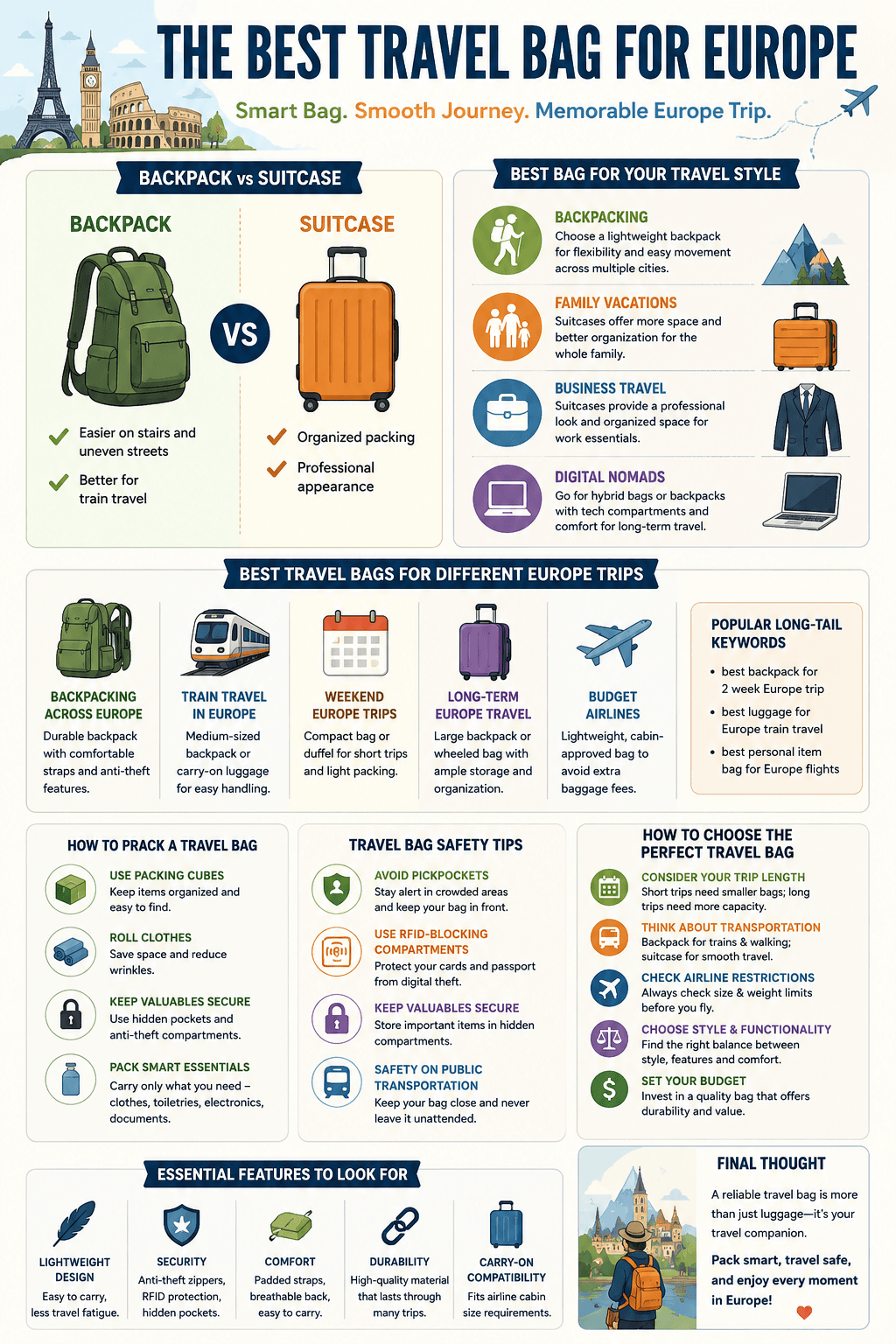
Best Travel Bags for Europe | Infographic